This guide explains how to evaluate Ade Sara based on sourcing transparency, quality indicators, and safe use practices. Ade Sara is commonly discussed in regional beauty and wellness contexts, often associated with plant-based preparations. The article provides objective background on ingredients, risk management, supplier due diligence, and practical requirements before selection and use.
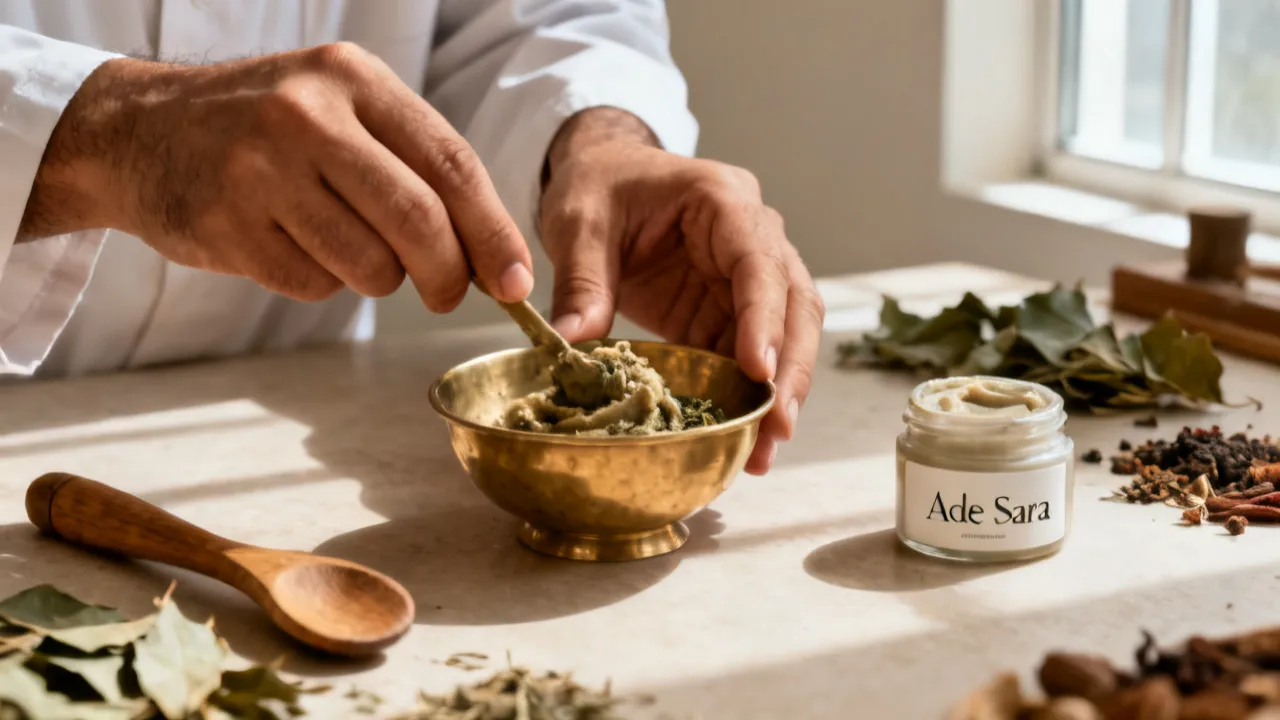
Ade Sara buyers should focus first on verifiable sourcing, transparent formulation details, and clear handling conditions—because “quality” is not only about texture or scent, but about consistency, safety, and traceability. Before purchasing, confirm the ingredient list, manufacturing standards, batch traceability, and storage instructions. If a supplier offers pricing, ask whether pricing reflects processing method, ingredient grade, and testing (where applicable). Then, align selection with your intended use and any relevant skin or health considerations.
Because “Ade Sara” may be used as a general name across multiple sellers and traditions, you should avoid assuming that two products with the same name are identical. A responsible approach treats Ade Sara as a category defined by its documented attributes—what’s inside, how it was made, what checks were performed, and how it should be stored—rather than treating the name alone as proof of quality. When buyers ask the right questions and suppliers can answer clearly, the likelihood of safer, more consistent outcomes increases substantially.
Ade Sara is referenced in wellness and beauty-oriented conversations, where many consumers look for plant-derived preparations and tradition-informed blends. Even when a product name is familiar, the meaningful question is rarely the name itself—it’s the composition and the chain behind it: which plants or inputs are used, how they are processed, and how reliably the product can be reproduced batch to batch. From an industry perspective, two products both described as “Ade Sara” can differ substantially if their starting materials, extraction/processing, or preservation approaches differ.
Accordingly, an objective evaluation framework should treat Ade Sara as a category to be assessed on documented attributes rather than assumptions. In practical terms, that means paying attention to (a) ingredient transparency, (b) supplier responsibility, (c) safety requirements for the intended use, and (d) handling and storage conditions that protect product stability.
To evaluate Ade Sara responsibly, it helps to understand that plant-based preparations sit in a middle ground: they are derived from natural inputs, but they still have quality variables. Botanical raw materials can vary by harvest season, growing conditions, and post-harvest handling. Processing steps—cleaning, drying, milling, extraction, filtration, blending, and preservation—can change consistency and the presence of potential contaminants. Even packaging choices affect how well the product maintains its properties over time.
So, when someone says “Ade Sara works,” the buyer should translate that into a set of questions: What specifically is in the product? What processing approach was used? How stable is it? How should it be stored? Does the supplier provide batch traceability and clear instructions? The “feel” or scent can be reassuring, but only documentation and handling guidance can help you understand whether you can reliably reproduce that experience and use it safely.
For plant-based wellness or beauty items—whether topical, aromatic, or mixed into routines—quality typically shows up in repeatable sensory characteristics and stable physical properties. Yet objective consumer due diligence goes further:
When suppliers discuss Ade Sara, consumers often try to infer quality from appearance or scent. However, an expert approach treats those as secondary. The primary proof comes from documentation and handling requirements.
Quality in plant-based preparations is also about what you can’t easily see. For example, two products might smell similar and have similar color, but they could differ in microbial load if one supplier uses better sanitation during processing or chooses preservation strategies appropriate for the product’s water activity. They could also differ in particle size distribution in powders or in extraction completeness for concentrates. Those differences can influence texture, absorption, and irritation potential.
In topical products, quality also includes how predictable the product is on skin. Predictability comes from repeatable manufacturing controls and appropriately tested stability. A product might be “natural,” but it should still be formulated and handled in a way that maintains safety and usability through its shelf life. For buyers, this means checking whether storage conditions are specified and whether the supplier acknowledges that plant-based products can degrade if mishandled.
Additionally, quality should reflect responsible labeling practices. Clear instructions about intended use and contact precautions can be a meaningful safety signal—especially when the product is intended for facial or scalp areas. If the label is vague, buyers should interpret that as a risk factor rather than a minor inconvenience.
Because the Ade Sara name can appear in many marketplaces, supplier evaluation becomes the practical lever for risk reduction. A responsible buyer should request (or look for) the following:
In industry practice, the top suppliers do not merely describe the product—they help you understand how to keep it safe and consistent. If information is missing, it’s not automatically “bad,” but it does raise the uncertainty a buyer should account for.
To make supplier evaluation more concrete, consider the difference between what suppliers say and what suppliers can substantiate. For instance, a seller might claim “high purity” or “natural and clean,” but unless they provide an ingredient list, batch identification, or quality testing information, you cannot verify the claim. Responsible buyers translate “claims” into “verifiable outputs.”
Here are additional due diligence practices that often matter for plant-based products:
Supplier responsiveness is also a signal. Reputable suppliers may not always have every document ready for a casual buyer, but they can typically provide clear, consistent answers and basic safety guidance. If questions trigger vague replies or evasiveness, that increases buyer risk—particularly for products that contact sensitive skin.
Price is a useful signal when you understand what it likely includes. However, because your prompt does not provide specific price figures, treat the “pricing” discussion as a framework rather than a quote. In general, Ade Sara pricing may differ due to:
For objective decisions, compare products on documented differences rather than on price alone. If two sellers list “Ade Sara” at sharply different prices but provide similar ingredient details and handling instructions, investigate why. Conversely, if a higher price comes with clearer labeling and batch traceability, it may represent better process control.
It can also help to think in terms of “what you’re paying for.” With plant-based products, price differences often reflect one or more of the following:
However, price can also be misleading. Some expensive products may not be better if they merely use premium marketing without improving quality controls. Similarly, some lower-priced products can be safe if they have transparent labeling, batch traceability, and appropriate handling instructions. The buyer’s job is to connect price to documented quality signals.
So if you notice a price gap, treat it as an invitation to ask questions, not as a final verdict. Ask whether the cheaper option offers the same ingredient clarity, same batch traceability, and same storage requirements. If those fundamentals differ, the price difference becomes understandable.
Even within topical wellness categories, intended use changes what “safe and suitable” means. For example, a preparation intended for scalp use can behave differently from one intended for facial contact depending on dilution, texture, or potential irritants. For any Ade Sara product selection, an industry-minded approach considers:
If the product is topical and you have sensitive skin, treat the first use as an assessment period. Apply conservatively, monitor for irritation, and stop use if discomfort occurs. This is a standard risk-management step rather than a marketing claim.
Because “Ade Sara” may come in different forms—such as oil-like preparations, creams, powders, or blends—the intended use is not just about where you apply it, but also how you apply it. For example:
A responsible routine-building approach is to treat Ade Sara as one variable among others. If you already use strong exfoliants, retinoids, or other actives, introduce Ade Sara cautiously and consider patch testing and gradual integration. Similarly, if you are using other botanicals, be mindful that “natural” ingredients can still overlap in potential allergen or irritant profiles.
Intended use also intersects with user behavior. Even a well-made product can become less safe if it is contaminated during use—for example, by using dirty applicators, double-dipping, or leaving the lid open in humid conditions. Buyers should consider these practical realities and follow storage guidance closely.
In many nearby communities where plant-based preparations are part of longstanding cultural routines, consumers may prioritize tradition, word-of-mouth, or how a product “feels” after application. Those cues can be helpful, but the safest modernization of this approach is to keep cultural familiarity while adding documentation checks—especially because modern marketplaces can include duplicate names with different formulations.
Where local marketplaces rely on trust networks, the buyer’s responsibility is to convert trust into verifiable questions: “Which batch is this?”, “What are the ingredients?”, and “How should it be stored?” In practical terms, asking these questions is no different from how a cautious shopper evaluates cookware or skincare—documentation simply matters more for plant-based preparations with variability in inputs.
Local buying can involve different risk patterns than online or formal retail. For example, informal transactions may not provide clear batch information, and storage conditions during transport may be unknown. If a product has been exposed to heat or direct sunlight, its texture and stability can change. For plant-based preparations, that can affect both the sensory experience and the safety profile.
Therefore, cultural preferences and convenience should be balanced with a few non-negotiables:
In some cases, you can still respect local practices while adding safety checks. For instance, you might buy from a community vendor you trust, but still ask for the manufacturer’s ingredient list, the storage conditions printed on the packaging, and a batch identifier. If the vendor cannot provide basic details, your risk increases—and you can adapt by patch testing carefully and using smaller quantities until you establish reliability.
| Evaluation Area | Ade Sara Selection Standard | What to Ask / Verify |
|---|---|---|
| Ingredient transparency | Clear ingredient list and consistent naming | Request full ingredient details (including botanicals); confirm whether names are standardized |
| Supplier traceability | Lot/batch identification and production-to-packaging continuity | Look for batch/lot number; ask how it links to manufacturing and expiry |
| Quality control approach | Evidence of routine checks (as applicable to the product type) | Inquire about stability checks, microbial controls, or other relevant QA methods |
| Handling & storage | Storage instructions that match product composition | Ask for temperature/light guidance and container recommendations |
| Use suitability | Alignment between product claims and your intended routine | Confirm intended use context (topical vs. other); check for contact-safety notes |
| Price justification | Pricing that reflects documented differences | Compare ingredient grade, packaging, and traceability across sellers |
Source basis (for responsible background guidance): This article’s safety and buyer-diligence approach aligns with widely used consumer protection and product safety principles, such as those reflected in guidance from official bodies and scientific consensus on skincare risk management (e.g., allergy/irritation avoidance, labeling clarity, and batch traceability). For chemical and product labeling frameworks, readers can consult resources from regulators such as the U.S. FDA (for cosmetics/labeling and consumer safety concepts), the European Commission for cosmetic product principles, and the OECD on quality and safety culture in industrial contexts.
While specific regulatory details vary by region, the underlying safety logic is consistent: consumers should have enough information to use a product safely, and manufacturers/suppliers should maintain systems that ensure product quality. Ade Sara evaluation should therefore focus on the practical overlap between regulatory expectations and real-world consumer needs: correct labeling, safe handling instructions, and traceability that can support investigations if something goes wrong.
Step-by-Step Guide: Buying Ade Sara With Reduced Uncertainty
To further reduce risk in real-world buying conditions, you may also consider adding a “receipt and record” habit. Save the product label photo, store batch information, and keep the seller name. If you later notice irritation or unexpected changes in texture, this record makes it easier to identify whether the batch might be relevant. That’s especially useful for products that are plant-based and can vary in input quality across harvest seasons.
Conditions/Requirements: When You Should Pause or Avoid
It also helps to interpret “warning signs” consistently. For example, if a seller refuses to share ingredient lists or batch numbers, that may indicate a documentation gap. In contrast, if a seller has a complete label but cannot provide additional testing paperwork, it may still be acceptable if the product includes shelf-life, appropriate storage instructions, and clear intended use. The key is to decide based on the total picture rather than a single missing document.
From an industry standpoint, plant-based products often face variability due to seasonal input differences, extraction consistency, and moisture control during processing. That means a mature supplier typically focuses on standardization:
When consumers say an Ade Sara preparation “works well,” they may be describing sensory success. Industry teams interpret that as a signal to check consistency drivers: did the supplier maintain input standards and process controls during that production period?
Consistency is not only about how the product looks on day one. It’s about how the product behaves over time in a real home environment. Many factors influence that:
From a supplier’s perspective, designing a product that remains safe and consistent across common storage and usage conditions requires careful formulation and packaging selection. Buyers can’t see every manufacturing detail, but they can infer the level of maturity by looking for traceability, stable handling instructions, and clear labeling. A supplier that invests in these areas typically also invests in process control.
Additionally, plant-based products may require different preservation strategies depending on water content. If a product is water-rich, microbial growth becomes a key safety issue. If a product is oil-based or has low water activity, microbial controls may differ. Buyers should therefore pay attention to the product type and how that aligns with storage and handling guidance. If a seller claims something is stable without offering storage instructions appropriate to the product’s form, that mismatch can be a red flag.
It’s important to treat any botanical preparation with the same practical care you’d use with other topical wellness products. Natural does not automatically mean harmless for every skin type. Responsible usage includes:
If irritation occurs, stop use and consider consulting a qualified healthcare professional, particularly for persistent reactions. This approach is standard and aligns with the principle that consumer safety depends on both product quality and proper use.
Risk management goes beyond patch testing. It includes recognizing that skin reactions can sometimes be delayed. A product might not irritate on first application, but cause redness, itching, or dryness after repeated use. That’s why the “first use as an assessment period” concept matters. For cautious buyers, starting with less frequent application or limiting exposure time can be a practical precaution.
Here are additional practical safety steps that are relevant to many plant-based preparations:
In addition, if the product is intended for the face, you should be especially careful with the eye area and sensitive zones. Even products that are “natural” may contain constituents that cause stinging or dryness. Buyers should follow label guidance closely and avoid improvising with the product in ways that were not indicated by the supplier.
If you have a history of eczema, allergies, or chronic dermatitis, your threshold for experimentation should be lower. Patch testing is often more than a suggestion in those cases. And if you’re using prescription skincare or have active inflammation, consider discussing with a qualified healthcare professional before introducing new botanical preparations.
Ade Sara typically refers to a plant-associated preparation used in wellness or beauty routines. However, formulations can vary by supplier. For objective selection, focus on the ingredient list, batch traceability, and handling instructions rather than relying only on the product name.
Because names can be reused across different sellers, “Ade Sara” may not uniquely identify the exact botanical blend or formulation method. Therefore, the most reliable way to understand what you’re buying is to examine the ingredient list and any documentation that links the product to a specific batch or production run.
Look for clear ingredient labeling, consistent formulation cues, batch/lot identifiers, and storage directions that match the product’s composition. Pricing can be a clue, but only when it correlates with transparent differences in sourcing, packaging, and quality control practices.
High quality is rarely proved by a single factor. It’s typically demonstrated by how well multiple signals align: clear labeling + batch traceability + appropriate handling guidance + responsiveness to buyer questions.
Yes. Confirm intended use (topical area and frequency), review contact-safety guidance, and ensure proper storage. If you have sensitive skin or known allergies to botanical ingredients, consult the supplier for clarification before use and consider a patch test.
Additionally, consider your current routine. If you’re actively using strong exfoliants or irritant-prone actives, introduce Ade Sara carefully and prioritize skin tolerance. The goal is to reduce the chance of confusing irritation causes.
Stop using it immediately. Rinse the area gently with clean water. If irritation persists or worsens, seek medical advice. This is a safety-first approach consistent with responsible consumer practice.
If you suspect an allergic reaction (e.g., swelling, hives, or persistent redness), don’t “test again.” Instead, preserve the product label and batch information in case medical professionals need to evaluate the ingredients.
Prices often reflect differences in input grade, processing method, packaging quality, and the supplier’s documentation and quality control effort. Compare what is written on labels—especially ingredient lists, batch traceability, and storage instructions—before concluding that one price is “better” in every case.
Sometimes the cheaper option may be missing key details like lot number or clear storage guidance. If so, the “value” might be less because your personal risk and uncertainty increase.
Ask for the full ingredient list, batch/lot identifiers, storage requirements, and clarity on manufacturing or quality checks. If a supplier cannot provide basic documentation, treat that as a decision factor.
If you are buying for sensitive use, you may also ask whether the product is intended for facial or scalp contact and whether there are known allergen considerations or irritation warnings based on supplier testing or known constituent risks.
Recommended storage depends on composition (e.g., whether it is moisture-sensitive). Use the storage guidance provided by the supplier. If storage instructions are missing, do not assume—seek clarification or select another product with complete handling information.
In many cases, general principles apply (cool, dry, protect from light), but you should not rely on general principles when the product form differs. Follow the label because the supplier likely accounted for the product’s formulation and packaging.
Compatibility depends on your other products and how you intend to use Ade Sara. To reduce risk, introduce one change at a time and monitor skin response. If your routine includes strong actives, be especially cautious and consider patch testing.
As a best practice, keep track of what you applied on the day of any reaction. This record helps identify whether Ade Sara is the likely trigger or whether another product introduced irritation.
Choose sellers that provide clear labeling, batch traceability, and transparent handling instructions. In many markets, reputable supply chains can be recognized by how consistently they answer ingredient and storage questions.
If you’re buying locally, ask for the same core details you would ask for online. The medium of purchase should not reduce your safety expectations.
In many local communities, tradition influences preferred textures, scents, and application routines. You can respect those preferences while still applying objective checks: verify labeling, storage conditions, and batch traceability. This balances cultural familiarity with modern consumer safety.
If tradition recommends a method that differs from the supplier’s guidance, prioritize the supplier’s instructions for safety. You can still consider tradition as context, but the product label and handling requirements should govern safe use.
Ade Sara selection should be guided by objective indicators: transparency in ingredients, traceability through batch information, and clear storage and use requirements. Instead of treating pricing or reputation as the final proof, compare documented attributes and apply responsible first-use practices—especially if you have sensitive skin. By combining cultural awareness with supplier due diligence, you can reduce uncertainty and make a more reliable choice aligned with safe consumer standards.
Ultimately, responsible buying is a habit of converting uncertainty into verifiable details. When you ask clear questions—about what’s in the product, how it’s made, which batch you’re receiving, and how to store it—you create a practical safety net. That net protects not only your immediate experience, but also your ability to predict outcomes across future purchases.
If you share the exact Ade Sara variant you mean (e.g., ingredient list, intended use, container type, and any price/supplier/location details you have), I can refine the comparison criteria to match that specific product profile.
Striking the Perfect Balance: Navigating Premiums and Out-of-Pocket Expenses in Senior Insurance Plans

Explore the Tranquil Bliss of Idyllic Rural Retreats

How to Make Lasting Memories at Disneyland Attractions

Affordable Phones and Plans for Seniors

Affordable Full Mouth Dental Implants Near You

Unlock the Top Kept Secrets to Finding Your Ideal Dentist for Flawless Dental Implant Results!

Discovering Springdale Estates

Unveiling RS Sul Telecom Services

The Guide to Car Trading


Understanding Rcn Revisional Processes
Rcn Revisional processes are critical in ensuring the accuracy and relevance of technical information across various industries. These procedures are integral in maintaining up-to-date documents, technical manuals, and blueprints crucial for operational success. This guide explores the significance of Rcn Revisional, highlighting its applications, benefits, and the systematic approach employed in such processes.

Exploring the Depths of GHp 5h SsiBae
The enigmatic keywords "GHp 5h SsiBae" have sparked curiosity and interest across various domains. While seeming cryptic, their significance may unfold within a specific context or field. This article aims to dissect the layers surrounding these terms, providing an exploratory analysis from an industry expert's lens, focusing on their potential implications and applications.

Understanding Alelo Pod: Practical Industry Insights
This guide explains what Alelo Pod is used for, how it fits into modern biochemical workflows, and which practical factors buyers should weigh before purchase. Objectively, “Alelo” relates to genetic variation terminology, while “pod” suggests a packaged or controlled format for handling. Readers will learn evaluation criteria, sourcing considerations, and key requirements to discuss with suppliers.
Ade Sara Guide: Sourcing, Quality, and Use Considerations
This guide explains how to evaluate Ade Sara based on sourcing transparency, quality indicators, and safe use practices. Ade Sara is commonly discussed in regional beauty and wellness contexts, often associated with plant-based preparations. The article provides objective background on ingredients, risk management, supplier due diligence, and practical requirements before selection and use.

Understanding 0009968545 in Industry
This article delves into the significance of "0009968545" within its industry context, examining its applications, importance, and implications on modern businesses. "0009968545" represents a unique identification metric crucial for inventory management, data tracking, and efficient logistical operations in numerous sectors.

Obasan 2012: Objective Guide to Key Evaluation Points
Obasan 2012 is a reference point for evaluating home-care or consumer products through an evidence-minded lens. This guide explains what “Obasan 2012” typically signifies in product discussions, outlines how reviewers weigh ingredients, usage conditions, and supplier reliability, and provides a structured comparison framework with practical requirements and FAQs.
