This guide explains how Spin Automatica systems improve precision in automated spinning tasks, covering selection criteria, setup principles, and operating top practices. Objectively, automated spinning equipment is used across manufacturing to stabilize torque, reduce variation, and standardize throughput. Readers will also find a comparison-style supplement, practical conditions to verify, and expert FAQs.
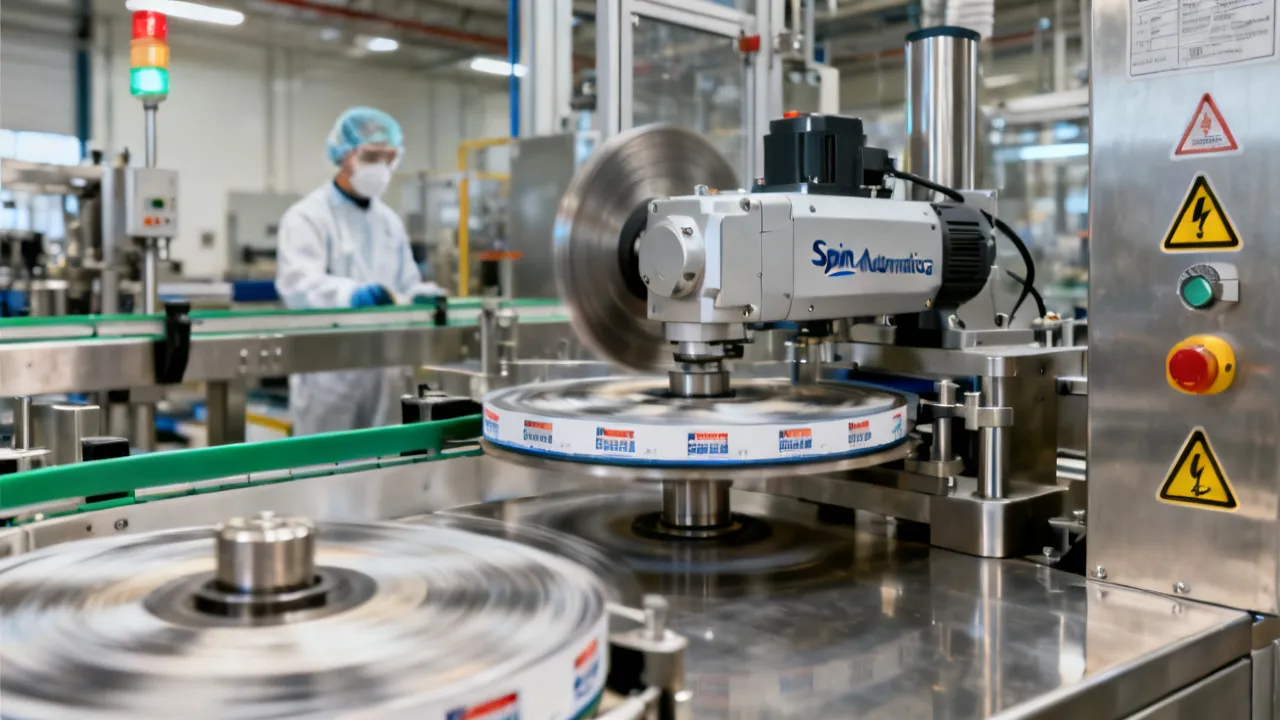
Spin Automatica refers to automated spinning control used to achieve repeatable motion—typically by regulating torque, rotation speed, timing, and feedback from sensors. If your goal is tighter process stability and fewer variation spikes, the very critical step is not “buying a machine,” but confirming your process requirements: target RPM range, acceptable runout/tolerance, part geometry compatibility, safety interlocks, and the quality of the feedback signals that govern the spin cycle.
From an industry perspective, the top-performing spinning setups share a common theme: the control loop is matched to the load. That means your mechanical stiffness, fixture design, and damping characteristics must align with the controller’s strategy—otherwise the machine may hit the commanded speed yet still produce inconsistent outcomes.
Because “price” and “supplier” details can vary widely by configuration (motor class, spindle/axis count, sensor package, integration scope, and installation requirements), this article focuses on how to evaluate cost drivers and supplier capability without relying on unverified numbers. If you request specific quotations later, the checklist below will help you compare offers on the same technical basis.
Automated spinning is widely applied where controlled rotational motion affects downstream results—such as surface processing, curing/finishing cycles, labeling or coating steps, and material conditioning where uniform exposure is beneficial. In many facilities, the value is not only speed; it is consistency. When a spinning stage is automated, it can reduce operator-to-operator differences and make quality checks more traceable.
However, “automation” is only as strong as the measurement and repeatability architecture. A spinning system that uses basic open-loop control may appear adequate during trials, but drift over long runs can emerge from temperature changes, motor aging, belt or coupling compliance, or fixture wear. Modern systems commonly use closed-loop feedback (e.g., encoder feedback, current/torque monitoring, vibration or load sensing) to counter such drift.
It also matters that spinning is often coupled with other steps: material feed, adhesive or coating application, environmental conditioning, curing, metrology, and packaging. If the spin stage is mis-tuned or poorly integrated, it can create downstream defects that look like coating chemistry problems, adhesive variability, or operator error. In reality, the root cause may be the spin profile itself—ramp rate too aggressive, dwell time insufficient, or feedback filtering inappropriate for your load dynamics.
In many manufacturing environments, one of the most visible issues is not obvious failure but gradual shift. For example, a process that initially hits an acceptable uniformity spec may later drift toward the edge of the tolerance band. When that happens, teams often increase inspection frequency or add manual correction steps. That is costly and usually reactive. A well-designed Spin Automatica system should be able to maintain stability over time by combining robust mechanics, validated control, and disciplined operational checks.
To interpret claims from suppliers and to plan a successful rollout, it helps to understand the typical component categories that govern spinning precision.
When a supplier provides documentation, focus on what they measure—not only what they advertise. Ask about calibration routines, inspection methods for alignment, and how the system confirms safe start conditions. Also ask what happens when the system detects an abnormal condition: does it pause and alert, does it switch to a degraded mode, or does it stop the cycle and require operator reset?
Another important dimension is how the machine “knows” that it is in a safe and repeatable state. For example, some setups may require homing sequences, verification of clamping pressure or position, confirmation that sensors are within expected ranges, and validation of spindle health signals before enabling production speed. If your acceptance criteria do not include these checks, you may experience unpredictable behavior later.
Choosing the right configuration should begin with process requirements, not with marketing features. Consider these criteria in order:
To make selection objective, define a “requirements document” that links each process target to a technical capability. For example: “Runout must be within X at Y RPM” should map to sensor feedback, spindle stiffness class, alignment verification method, and fixturing tolerance. When that mapping exists, supplier comparisons become straightforward.
Also confirm whether the system’s control performance is specified under conditions that resemble your production. Some vendors characterize performance using ideal balancing or lab fixtures. Your process may involve varying part mass within tolerances, changes in clamping force, or temperature swings. These factors can change resonance behavior and the stability of the closed-loop loop.
Instead of treating “price” as a single number, treat it as the sum of design scope. Common cost drivers include:
If your procurement team requests “unit price,” ask for a technical breakdown: what’s included in that figure and what is excluded (install, commissioning, spare kits, training hours, and measurement verification). This approach helps you compare multiple supplier proposals fairly.
Also ask how long the supplier expects “stabilization time” to be. Some systems need warm-up periods, additional calibration cycles after long non-production downtime, or periodic checks on sensor alignment. These operational time costs can be overlooked when pricing is only hardware-focused.
A further hidden cost driver is change frequency. If your production requires frequent product changeovers—different part geometries, different coating recipes, different mass distributions—then the system needs efficient recipe governance and reliable quick verification steps. A supplier who includes robust changeover procedures and training might cost more up front but save time during ongoing operations.
A credible supplier for Spin Automatica-type systems should demonstrate not only product knowledge but also process discipline. In practical evaluations, look for:
For objective decision-making, request references or case studies that match your application class (not merely “general automation”). The top match is a supplier who has already solved problems similar to yours: vibration management, fixture repeatability, or synchronized cycle timing.
During supplier discussions, avoid vague answers like “we tune it until it works.” Instead, ask: what measurements do you use to validate stability? How do you define “stable” during commissioning? What threshold triggers a retune or a mechanical adjustment? The more structured and measurable their answers, the higher the likelihood the installation will transition smoothly into production.
Also ask whether the supplier is willing to collaborate during acceptance testing using your own measurement tools. If they rely entirely on internal diagnostics that don’t map to your quality requirements, you risk misalignment between “machine seems fine” and “product meets spec.”
Even when the hardware is strong, day-to-day performance depends on operating discipline. The following practices help maintain repeatability.
Automated spinning systems should undergo periodic verification. Instead of “calibrate everything forever,” align cadence with risk: critical sensors (encoders, position feedback), torque/speed verification checkpoints, and mechanical inspections should be scheduled based on duty cycle. Your supplier should provide recommended calibration intervals and acceptable tolerance bands.
What “verification” should include depends on your quality drivers. For instance:
Also ensure you understand the difference between a calibration process and a verification process. Calibration corrects sensor offsets. Verification checks whether the system still behaves within tolerance. Many production teams treat these as identical; a structured approach reduces unnecessary downtime and maintains quality.
Use structured recipe control: lock down parameter sets for each approved product, maintain version history, and ensure that production logs capture enough detail to diagnose deviations. In regulated contexts, this traceability becomes essential for audit readiness.
Even in non-regulated contexts, traceability matters because it shortens troubleshooting. When a batch fails due to a quality shift, you need to know:
To support root-cause analysis, ensure logging includes timestamps synchronized with upstream and downstream steps. If the spin stage starts earlier or later than expected, the interaction with materials (e.g., curing, adhesive set time) can create defects that appear unrelated to spinning.
Motors and bearings can drift with temperature. A robust commissioning plan will define warm-up behavior and stabilization criteria. If your process is sensitive, plan your batch timing so measurements are taken after the system reaches a stable thermal condition.
Thermal drift can show up as subtle performance changes: speed overshoot may reduce after warm-up, or settling time may change. Vibration behavior can also change as lubricant viscosity changes with temperature. For tight control, consider implementing a “warm-up and verify” sequence before production, especially after long downtime.
Another thermal aspect is the part itself. If the part heats due to a prior step and you then spin immediately, the resulting mechanical properties may differ from standard conditions. In such cases, you must decide whether to treat thermal factors as part of your recipe or as a separate operational standard.
Spin cycles magnify imbalance effects. Small fixture misalignments can cause measurable runout changes. Track fixture wear, document refurbishment steps, and standardize the loading method to reduce operator-induced centering differences.
Fixturing is often the hidden driver of variation. For example, if clamping force changes over time due to wear in a locating mechanism, you may see increased variability despite controller stability. A good operational practice is to define fixture “service thresholds” that are tied to measurable indicators (runout change rates, clamping force drop, or visual wear limits).
If parts vary in mass or geometry within tolerance, you may need to evaluate whether a single fixed recipe is truly sufficient. In some processes, adaptive torque limiting and careful control of ramp rates can reduce the impact of imbalance. But the best approach is to quantify part variability and map it to acceptable machine response and quality outcomes.
Additionally, ensure that loading orientation is consistent when parts are not symmetric. If operators can mount parts in multiple orientations, you may need mechanical features that enforce orientation or recipe selection logic that matches part orientation.
To support objective selection, the table below compares common supplier approaches and the practical requirements you should insist on. (This supplement is written to be decision-useful without depending on any unverified numeric claims.)
| Category | What to compare | What you should require | Why it matters for Spin Automatica outcomes |
|---|---|---|---|
| Control method | Closed-loop speed, torque limiting, vibration monitoring, or hybrid strategies | Documented tuning approach and how stability is verified during commissioning | Determines how well the system resists drift under changing loads |
| Mechanical alignment | Spindle/bearing setup details, runout specs, fixture repeatability approach | Acceptance test method and inspection criteria for centering and runout | Prevents consistent errors that look like “controller issues” |
| Recipe handling | Versioning, password/role access, and audit logs | Recipe governance workflow and data capture fields | Reduces accidental parameter deviations that affect quality |
| Safety compliance | Guarding, safety PLC integration, safe torque/off strategies | Safety validation documentation and on-site verification steps | Protects personnel and ensures uptime through compliant operation |
| Integration scope | Sync with conveyors, sensors, or upstream/downstream equipment | Interface list, I/O mapping, timing diagram, and commissioning plan | Prevents throughput bottlenecks and mis-coordination faults |
| Service and maintenance | Preventive schedule, spare kit availability, response lead times | Maintenance manual and spare part strategy tailored to your duty cycle | Improves long-run reliability and reduces downtime surprises |
Beyond the table, you should also compare how suppliers handle the “unhappy path.” For example, if the part fails to seat properly, does the system detect it early and refuse to spin? If a sensor signal drops or becomes noisy, does the controller fail safely? These behaviors matter because production stability depends on how the system behaves under abnormal conditions, not just during nominal cycles.
When comparing supplier options, ask how they manage updates. If the software requires upgrades for bug fixes or tuning improvements, ensure that versioning and regression testing are included. A small software change can subtly alter control loop behavior and affect quality outcomes if not properly validated.
The following steps provide a structured plan you can use with your chosen supplier. Adapt them to your specific product and regulatory environment.
In practice, teams often underestimate time needed for iteration. To manage risk, agree on gating conditions early. For example: after initial mechanical verification, proceed to speed ramps only after vibration and sensor integrity checks pass. After control tuning, confirm that the system maintains stable behavior across multiple days and after thermal cycles.
Also consider “operator training validation.” A good practice is to verify that different operators can load parts the same way and select the right recipes. If loading technique matters, you should include a training check step that mimics real production constraints (time pressure, shift changes, standard work).
“Pre-run” should also include a controlled dry run scenario where you test the process without fully committing materials or expensive parts. A dry run allows you to verify that the sequence—clamp, check interlocks, ramp, dwell, settle, release—executes reliably and that logs show complete and correct event data.
If your production includes upstream/downstream steps that are sensitive to timing (for example, coating application timing relative to spin start), confirm that the system’s cycle synchronization is validated with the actual line. Commissioning should include integrated tests, not only stand-alone spindle runs.
If you operate in “nearby” manufacturing regions where shared supplier ecosystems and common industrial conventions exist, remember that successful deployments often depend on smooth commissioning logistics: how quickly technicians can access the line, how spare parts are stored on site, and how training sessions are coordinated with shift schedules. On the shop floor, teams often describe “good automation” as something that stays predictable after the learning period—so insist on stability verification, not just initial startup success.
Local conditions can also change what “production readiness” means. For instance, in some facilities, maintenance teams might have different expertise levels or different downtime windows. If the supplier assumes a certain level of maintenance capacity that doesn’t exist, your preventive maintenance plan may not be realistic. Confirm that spares are stocked and that maintenance tasks can be executed within your normal schedules.
Another practical point is how spare parts and calibration materials are handled. If specific calibration tools are required but not included, you may face delays later. Ask whether the supplier includes the tools and documentation needed for verification and whether they provide guidance for in-house calibration or only rely on vendor service.
In practice, it refers to an automated spinning control stage that runs rotational motion according to repeatable profiles—commonly involving speed and timing regulation, with feedback-driven correction to reduce variation across batches. The exact use depends on your application (finishing, processing, conditioning, or other rotationally sensitive steps).
In many production lines, spinning is not isolated. It is synchronized with loading mechanisms, application steps, and inspection or curing processes. Therefore, “Spin Automatica” may also include integration logic: start conditions, safety enable sequences, and logging/traceability features that ensure the spin cycle is reproducible as part of the broader workflow.
Compare proposals using an apples-to-apples checklist: included hardware features (sensors, safety modules), software scope (recipe management and logging), installation/commissioning responsibilities, acceptance test method, and training/service deliverables. Request a technical scope breakdown rather than focusing solely on a final number.
To make comparisons rigorous, ask each supplier to state assumptions explicitly. For example: “We assumed your facility provides wiring to X point,” or “We assumed you provide fixture design,” or “We assumed your parts are balanced to Y.” If those assumptions differ between proposals, then “price” cannot be compared directly.
Drift can result from thermal effects, fixture wear, lubrication changes, sensor alignment shifts, or changes in part load characteristics. A mature program includes preventive maintenance, periodic verification checkpoints, and controlled recipe governance to catch issues early.
Another contributor to drift can be “configuration drift” in software and parameters. If operators or maintenance staff can modify settings without controlled change management, the system may still appear “calibrated” but behave differently from approved recipes. Good recipe control and access restrictions reduce this risk.
For processes requiring tight repeatability under changing loads, closed-loop approaches generally provide stronger stability because they correct deviations in real time. Open-loop setups can be viable for very stable, low-risk conditions, but they are more vulnerable to drift when operating conditions change.
That said, closed-loop control is not automatically “better” unless the feedback measurement is reliable and the control loop is tuned appropriately for the mechanical system. A well-designed closed-loop system matched to the spindle dynamics will maintain performance; a poorly tuned one may oscillate or respond slowly, worsening variability.
Require tests that mirror your production reality: repeated-run stability, measured tolerance outcomes tied to your quality criteria, verification of interlocks and safe stops, and confirmation that logging/traceability fields capture what you need for diagnosis.
Also request robustness testing: run cycles that include typical part variation and verify that the system either maintains quality or handles out-of-tolerance conditions in a controlled way (e.g., alarms and reject handling). Acceptance should include both performance and safety behavior, plus the practical ability to recover after faults.
Fixturing is often a primary determinant of repeatability. Even the top controller cannot fully compensate for inconsistent centering, worn locating surfaces, or variable clamp force. A robust fixture design and maintenance plan are essential.
Fixturing also influences how the controller perceives load. If the fixture introduces compliance changes, then the mechanical plant seen by the control loop changes over time. That can affect stability and the ability to meet the desired ramp/dwell profiles.
There is no universal schedule; it depends on duty cycle, environmental conditions, and process sensitivity. A common approach is to follow supplier recommendations for baseline calibration intervals, then adjust cadence based on monitoring trends, alarms, and verified quality performance.
In many high-precision contexts, tuning should be treated as a controlled engineering activity rather than an operator task. Re-tuning should occur only after root-cause analysis indicates a genuine control or mechanical change that requires intervention. Verification checks can be routine, while re-tuning should be deliberate and documented.
Request commissioning and acceptance reports, safety validation documents, maintenance manuals, calibration certificates where applicable, and sample production logs demonstrating traceability for recipe versions, alarms, and key process variables.
Also request the “configuration baseline” documents: which software versions were used at acceptance, which parameter sets were locked, and what procedures govern future updates. Without these documents, it can be difficult to re-establish the exact approved behavior later.
For background on industrial automation reliability practices and quality systems, readers often consult frameworks such as ISO 9001 for quality management principles and general guidance on measurement system stability (e.g., ISO/IEC metrology-related documentation). For vibration/control fundamentals, standard control engineering literature and manufacturer technical notes provide helpful baselines. Where available, also review guidance from established machine tool and industrial automation bodies relevant to safety and commissioning.
Note: This article intentionally avoids quoting specific performance statistics or prices because those figures are highly configuration-dependent. If you share your target application, part characteristics, and desired operating envelope, you can request tailored supplier comparisons built on the checklist above.
Spin Automatica-style spinning systems deliver value when the mechanical setup, control strategy, safety design, and operational discipline all reinforce one another. The very effective path is structured validation: define success criteria, commission with documented methods, verify stability under real loads, and lock production recipes with traceable governance. With that foundation, you can evaluate supplier options on technical merit—transforming “automation” from a promise into a consistent manufacturing capability.
To reach true production confidence, treat spinning as a system-of-systems problem: the controller loop, the spindle and fixture mechanics, the sensor feedback quality, the integration timing, and the human procedures around loading and recipe selection all contribute. When those pieces align, the spinning stage becomes predictable over long runs—not just during early commissioning—reducing variation spikes, lowering scrap risk, and improving the reliability of your downstream process results.
While the earlier checklist provides a strong overview, the question “what to verify before you run production?” deserves a more granular approach. Many teams discover late in commissioning that they accepted a technically “working” system but missed practical verification items. Below are concrete categories of verification that can prevent expensive surprises.
Suppliers often demonstrate the system achieving a commanded speed and holding it within a tolerance during a short test. For production readiness, you should verify deeper aspects of control behavior, including:
Practical recommendation: request supplier documentation or commissioning reports that describe loop tuning criteria and stability tests. If they cannot explain how stability was verified, then the acceptance process may rely too heavily on subjective observations.
In spinning, the mechanical plant includes not only the spindle but also the fixture and part interface. To avoid “controller-only” thinking, verify:
Practical recommendation: define at acceptance how you will measure mechanical runout or centering repeatability. If you only rely on spindle-side diagnostics, you may miss compliance that exists in the fixture/part system.
Sensor-related issues are common, especially when “closed-loop” is described generically. Verify:
Practical recommendation: test the system’s response when sensor signals degrade (within safe limits). For example, confirm that the system detects out-of-range signals and stops or alarms in a safe and predictable manner.
Safety features often get treated as separate from quality and uptime. For production readiness, verify safety behavior thoroughly:
Practical recommendation: incorporate safety verification into acceptance testing with documented steps. If the supplier only verifies safety once during initial installation without formal documentation, you may face compliance or operational delays later.
Many spinning problems manifest not in the spindle itself but in timing interactions. To verify integration readiness:
Practical recommendation: run an integrated test cycle using your actual production sequence. Do not accept a spindle-only acceptance test if quality depends on the timing relationship between spin and downstream processing.
Once the system is mechanically and control-wise accepted, pilot production is where many teams still struggle. To mitigate risk, adopt validation strategies that create early warning signals.
Create a golden reference batch using approved recipe versions, representative parts, and standard operating conditions. Then define how you will compare subsequent batches:
This approach helps detect subtle drift. Even if quality remains within spec, you can observe trends that indicate risk before failure occurs.
For production stability, you need more than acceptance sampling. Implement trend monitoring for key signals such as:
Trend monitoring is especially useful when the process has long-term drift. If you only measure at fixed intervals, you may miss the early onset of drift patterns. With trend monitoring, you can schedule maintenance or re-verification before quality approaches tolerance limits.
Define what you do when something deviates. A response plan reduces downtime and confusion. It should include:
Without a response plan, teams often default to subjective troubleshooting. This creates inconsistent decisions and can worsen variability by applying inconsistent interventions.
One of the most common reasons spinning systems show variation is resonance crossing. If your ramp strategy passes through a resonance frequency range, the spindle/fixture system may oscillate. Those oscillations can affect runout and process uniformity. For production readiness:
Ask the supplier whether they performed a resonance analysis or empirical mapping. Even if they did not perform full modal analysis, they should be able to explain how they identified and managed resonance behavior during commissioning.
Vibration monitoring is useful, but it can also mislead if teams interpret vibration metrics incorrectly. Before production, clarify:
It’s possible for vibration to increase slightly without immediate quality impact, especially if your process is tolerant. Conversely, small vibration changes might correlate strongly with runout or surface effects. Therefore, during pilot production, perform correlation checks between vibration metrics and your actual quality measurements to interpret vibration data effectively.
Torque limiting can protect the system and stabilize behavior, but the chosen torque limits can influence the quality outcome. For production readiness:
If torque monitoring is used for adaptive control, verify the adaptation logic. For example, does it adapt too aggressively and cause oscillations? Does it adapt too slowly and fail to correct during rapid transients?
Recipe governance is a significant risk area. Even if operators cannot directly edit parameters, background changes can occur via software updates, parameter migrations, or restoration from backups. Before production:
Operationally, this prevents scenarios where quality failures occur because the system ran a slightly modified profile. Even minor changes in ramp rates or dwell times can alter quality outcomes in rotational processes.
Production readiness is not only about the first week of operation; it is about long-run stability. Verify maintenance aspects:
A system that is difficult to maintain can indirectly reduce quality stability. If maintenance tasks are skipped or delayed due to complexity, mechanical changes emerge and the control system may no longer provide consistent outcomes.
Suppliers often deliver documentation, but not always documentation that operators and maintenance teams can use effectively. Before production, verify:
Operationally useful documentation reduces response time when deviations occur. Response time matters because spinning processes often require stable conditions before resuming production.
Training is frequently treated as a checkbox. For Spin Automatica systems, training must ensure competence. Before production, consider:
Some facilities conduct a small competency test: have operators perform a simulated start, respond to a triggered warning scenario, and complete a basic verification process. If they can do this correctly, the system is more likely to perform consistently in production.
Not all deviations are equal. A system might show a measurable technical deviation that does not affect quality outcomes because the process is tolerant. Conversely, a small technical deviation might be highly correlated with a critical quality defect. Before production:
This alignment reduces unnecessary downtime and prevents “ignore warnings” behavior that can lead to quality failures.
In real manufacturing, you will change over products. Before production, verify how fast and how reliably you can re-qualify the system after a changeover:
Changeover qualification is often overlooked. A system might be perfect for one product but unreliable during frequent changeovers if fixture setup steps are inconsistent or verification routines are not standardized.
Repeatability is not only about technical performance; it’s also about repeatability under operational constraints like shift staffing, time pressure, and standard work variation. Before production:
If acceptance only uses ideal test conditions, production performance may diverge. The best acceptance tests replicate operational reality as much as possible without compromising safety.
Finally, confirm that supplier deliverables integrate with your quality system. Before production:
When the commissioning deliverables map to your quality processes, you reduce the chance of audit findings and reduce confusion during troubleshooting.
In summary, the key to successful Spin Automatica deployment is not simply achieving a working spin cycle. It is verifying that the control loop is matched to the mechanical plant, that the fixture and sensor architecture provide the consistency the controller needs, that the safety and integration behavior supports both compliance and uptime, and that the operational procedures and documentation enable repeatable execution. When these are validated and locked down, you create a spinning process that remains measurable, stable, and trustworthy across time, operators, and production changeovers.
Striking the Perfect Balance: Navigating Premiums and Out-of-Pocket Expenses in Senior Insurance Plans

Explore the Tranquil Bliss of Idyllic Rural Retreats

How to Make Lasting Memories at Disneyland Attractions

Affordable Phones and Plans for Seniors

Affordable Full Mouth Dental Implants Near You

Unlock the Top Kept Secrets to Finding Your Ideal Dentist for Flawless Dental Implant Results!

Discovering Springdale Estates

The Guide to Car Trading

Affordable Cell Phones Without Plans


Unpacking the 56d Bet Phenomenon
The concept of 56d Bet is gaining traction in the gambling sector as a specific betting strategy that combines elements of probability and statistical analysis to enhance winning chances. Originating from algorithms used in online gaming, this betting type garnered attention for its structured approach that aims to improve the predictability of outcomes in various casino games.
Spin Automatica: How Automated Spinning Systems Work
This guide explains how Spin Automatica systems improve precision in automated spinning tasks, covering selection criteria, setup principles, and operating top practices. Objectively, automated spinning equipment is used across manufacturing to stabilize torque, reduce variation, and standardize throughput. Readers will also find a comparison-style supplement, practical conditions to verify, and expert FAQs.
