This guide explains Fbde Nexion and how buyers typically evaluate products like it for procurement and performance fit. It offers objective background on what “Fbde Nexion” commonly represents in sourcing conversations, clarifies how suppliers and pricing factors are assessed, and prepares readers for practical decision-making. The article then adds a structured comparison and requirements checklist before ending with FAQs.
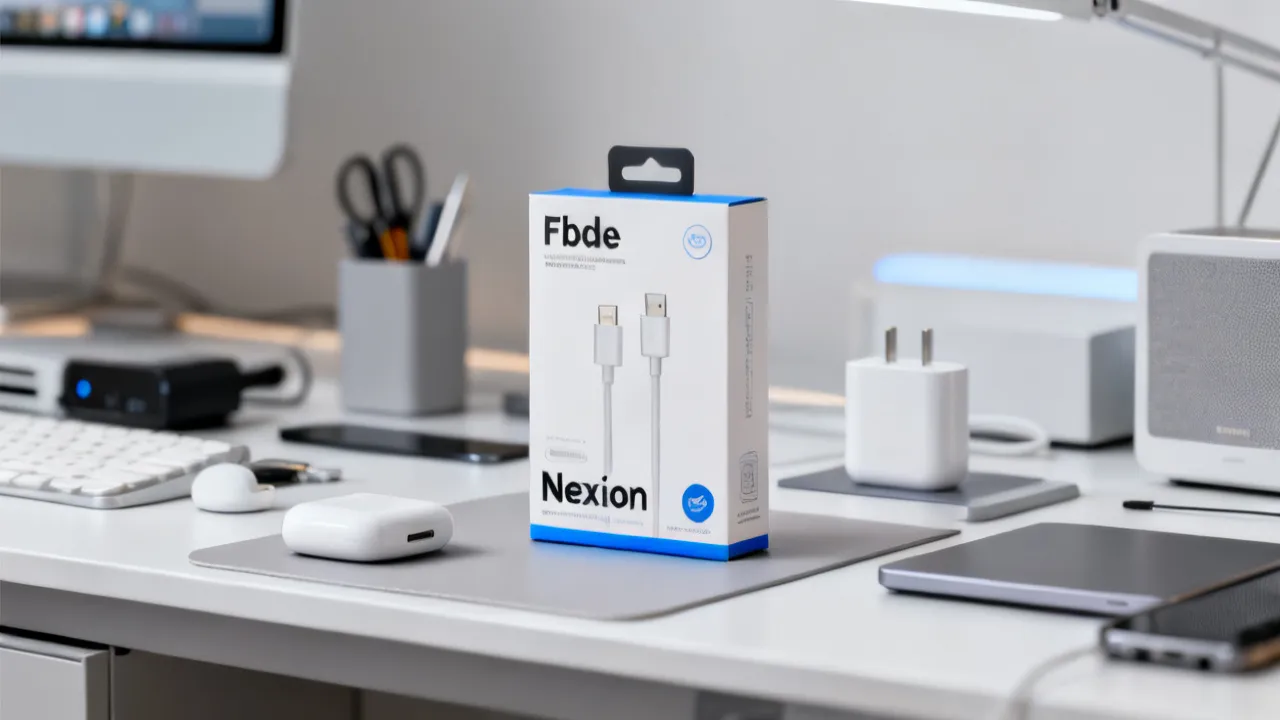
When you encounter “Fbde Nexion” in sourcing discussions, the central question is not just what it is, but how reliably it fits your use case—including specifications, supplier capability, and total cost of ownership. In professional procurement workflows, buyers typically validate documentation, confirm compatibility, and assess lead times before committing to price.
In this guide, you’ll find an objective framework for evaluating Fbde Nexion-style offerings, with practical conditions and requirements presented in a structured format later in the article. The goal is to help you make a reasoned choice aligned with quality, risk, and operational needs.
Because “Fbde Nexion” is often referenced in procurement contexts as though it were self-explanatory, it’s easy for teams to fall into the trap of treating the label as enough. In practice, many failures happen not because the product is inherently “bad,” but because a buyer assumed two items with similar names were functionally identical. The procurement discipline described below exists precisely to prevent that mismatch risk.
As you read, keep in mind that the term “Fbde Nexion” can serve as a shorthand for a specific catalog item, a component family, or a regionally distributed product line. Your job as a buyer (or as an engineering stakeholder supporting procurement) is to translate that shorthand into verifiable technical identity and commercial certainty.
“Fbde Nexion” is very often referenced as a product or branded component name used in procurement and supply-chain contexts. In such contexts, the term usually implies that buyers are comparing an identifiable item (or an item line) against alternatives by looking at:
Because product naming can vary by region, catalog, or distributor, the very professional approach is to treat Fbde Nexion as a lead identifier—then confirm the exact model, version, and documentation package that corresponds to your intended application.
In many procurement organizations, a “lead identifier” is exactly that: a starting point that triggers due diligence. For example, a buyer may see “Fbde Nexion” on a request for quotation (RFQ), an internal requisition, or a distributor catalog. But the buyer then asks: What is the manufacturer’s part number? Which revision? Is it functionally equivalent to a previously purchased item? What changed between revisions? What tests were used for acceptance? These questions are not bureaucratic—they are what prevent integration failures, rework, warranty disputes, and production downtime.
In addition, “Fbde Nexion” can sometimes be used informally to describe a category, not a single SKU. Teams may say “we need Fbde Nexion” when they mean “we need the component that meets X spec in the Fbde Nexion category.” When that happens, procurement should require the supplier to map the phrase to the precise SKU and configuration. Otherwise, the buyer risks purchasing an item that only approximates the intended requirements.
In real-world sourcing, “price” is only one element of procurement value. Buyers commonly evaluate the full economic picture, including:
For industry context, many organizations note that procurement teams increasingly use total cost of ownership (TCO) models rather than single-price comparisons, because TCO more accurately captures downstream costs. This aligns with common guidance from purchasing and supply management bodies worldwide, including the Institute for Supply Management (ISM) and research summaries in supply management literature.
To make TCO practical, procurement teams often break it down into “visible” and “hidden” costs. Visible costs include unit price, freight, customs, taxes, and any standard documentation fees. Hidden costs include integration engineering time, field or line-stop delays, scrap or wasted labor due to early-life defects, and the costs of managing warranty returns and disputes.
Even if a low-price quote looks superior at the spreadsheet level, the winning quote is often the one that reduces uncertainty. For instance, a supplier that offers precise acceptance criteria and strong traceability can reduce the buyer’s receiving inspection burden. Conversely, a supplier that provides incomplete documentation can increase inspection time, extend receiving hold periods, and delay production release.
Another aspect of value is risk-adjusted cost. If two suppliers quote different unit prices, the buyer should ask: Which supplier has fewer historical issues for this category? Which supplier has the ability to respond quickly during failures? Which supplier can provide replacement units within your production window? These questions turn “cheap” into “expensive” if the cost of failure is high.
When you’re assessing suppliers for an item identified as Fbde Nexion, a seasoned buyer typically begins with documentation and operational credibility. Key checks include:
From an expert procurement standpoint, “supplier capability” is often the differentiator between a smooth deployment and an extended troubleshooting cycle. Even when two vendors quote similar unit costs, the supplier that provides more reliable documentation and responsive support frequently reduces operational risk.
Supplier evaluation is also about predictability. A buyer doesn’t only need the right item once—they need repeatable sourcing. The questions you ask around traceability, revision control, and QA documentation help you judge whether you can reorder in the future without revalidation each time.
In many categories, buyers establish a reference point by reviewing prior purchase records: what was the defect rate? How quickly were returns processed? Were there recurring problems tied to batch/lot? Did engineering need to deviate from standard acceptance criteria? Supplier evaluation becomes far more accurate when procurement combines quote review with internal historical data.
Below is a compact set of decision factors used in professional sourcing negotiations. They’re written as practical evaluation checkpoints rather than marketing claims.
In addition to these core criteria, high-performing procurement teams typically add a few supporting questions during negotiation. For example:
These additional questions help you translate “a good quote” into “a quote that will work reliably after purchase,” which is the real objective in procurement.
Procurement mistakes often arise from assuming that brand-like naming guarantees identical technical meaning across suppliers. Professionals reduce that risk by insisting on concrete details:
These pitfalls are common because procurement teams often have incomplete context, especially when engineering is busy or when suppliers respond quickly with what looks like a matching item. Avoiding them requires a shared responsibility model between procurement and technical teams.
Here are additional ways teams typically stumble, along with practical ways to correct course:
The best defense is a requirement-first approach: define the requirement precisely, confirm the exact item identity, validate technical fit through documentation, and ensure receiving and support processes are aligned before the first shipment.
The table below is intentionally focused on evaluation categories. It does not include links, and it avoids speculative claims. Use it to compare vendor quotes in a consistent manner.
| Evaluation Category | What to Request or Verify | Why It Matters |
|---|---|---|
| Exact Identity | Model/version identifiers, configuration details, packaging identifiers, and datasheets that match your item code | Prevents mismatches and reduces integration failures |
| Technical Fit | Operating ranges, dimensions/interfaces, performance metrics, and any compatibility notes | Ensures the product behaves as intended in your environment |
| Quality Evidence | Inspection/QA documentation, acceptance criteria, and traceability records | Reduces risk during receiving and reduces rework probability |
| Warranty & Support | Warranty duration and scope, RMA steps, support channels, and expected response times | Protects continuity if issues appear after deployment |
| Commercial Terms | Payment terms, return conditions, shipping responsibilities, and liability terms | Clarifies who bears risk under different scenarios |
| Lead Time & Logistics | Estimated delivery windows, packaging requirements, handling notes, and transport method | Reduces scheduling risk and damage-in-transit issues |
| Total Cost of Ownership | Effort estimates for integration/testing, expected maintenance, and potential downtime impacts | Balances unit price against operational outcomes |
To make the table even more useful during real RFQs, many procurement teams pair each category with an internal score or a binary “acceptable / non-acceptable” decision. For example, if “Exact Identity” cannot be confirmed, you mark the quote as non-compliant regardless of price. That kind of gatekeeping reduces negotiation churn and prevents teams from arguing over details after they’ve already accepted risk.
Another practical improvement is to add a “documentation completeness” check. Procurement can request that the supplier submit a standardized documentation packet (datasheets, certificate of conformity, traceability evidence, warranty terms) and then evaluate completeness. This is often faster than evaluating documents one by one while comparing quotes.
Because buyers often ask, “How do we quantify sourcing risk and quality impact?”, procurement top practices frequently reference established supply management guidance and quality management frameworks. For example:
When you evaluate suppliers for Fbde Nexion-related purchases, aligning your internal requirements to such frameworks helps ensure your checklist is practical, auditable, and defensible.
While procurement teams may not always cite standards explicitly in negotiations, these frameworks influence how buyers structure documentation and acceptance criteria. In a well-governed environment, buyers and engineering define “evidence of quality,” not just “statements of quality.” That distinction matters because evidence can be audited and validated at receiving.
Additionally, risk quantification in procurement often uses a combination of historical reliability and operational impact severity. If a failure would shut down a line, procurement may require stricter evidence, more aggressive inspection sampling, or stronger warranty terms. If the item is low impact or has easy replacements, the buyer may accept lower evidence thresholds. This is not to reduce quality—it’s to align verification intensity with risk.
This step-by-step guide is designed for procurement teams, engineering stakeholders, and category buyers. Use it as a structured workflow rather than a one-off decision.
Define your requirements in writing: performance needs, interface requirements, installation constraints, compliance needs, and any acceptance test expectations. If you can’t describe the requirement, you can’t validate whether a Fbde Nexion item truly fits.
Precision is important because “specs” often get lost when conversations shift from procurement to operational teams. A requirement document should ideally include:
If you work in a regulated environment, requirements may also include traceability requirements (e.g., serial number retention), documentation retention, and audit-ready records. Even in less regulated industries, documenting requirements improves repeatability and reduces miscommunication.
Request the exact item code, model/version, and configuration details for the Fbde Nexion offering referenced by the supplier. Ensure your vendor quote matches that identity exactly.
Product identity confirmation should cover more than just a part number. It should clarify revision status, packaging configuration, included accessories, and any included software/firmware versions if relevant. If a supplier cannot provide revision details, that is often a sign of insufficient traceability practices.
A practical way to handle this step is to require the supplier to fill a “quote identity form” or to include specific fields in the quote (e.g., manufacturer part number, revision, description, packaging type). Procurement can then compare those fields directly to internal requisition codes. The mismatch risk decreases dramatically when identity is treated like a controlled field, not a free-text label.
Ask for datasheets and technical documents relevant to your application. Check for:
Documentation review is not limited to whether a datasheet exists. Procurement and engineering should evaluate whether documentation is:
Engineers should also verify that “documentation” includes information needed for integration: mounting instructions, electrical requirements, signal interfaces, wiring diagrams, safety notes, and any known constraints. In many real deployments, integration failures are not caused by the core product but by missing integration prerequisites. Treating those integration requirements as documentation items prevents delays after shipment.
In a professional procurement setting, you typically request evidence that production and receiving are controlled—especially traceability documentation tied to your batch/lot.
Quality and traceability evidence may include certificate of conformity, batch/lot identifiers, inspection results, and documentation that links units to production records. The key is linkage: the buyer should be able to trace from received units back to production batch and verification steps.
When evaluating traceability, consider the following:
Traceability is more than compliance; it is operational resilience. If issues arise, it allows you to determine whether the issue is isolated or systemic, and it helps you contain risk.
Align warranty terms, returns policy, and RMA processes with your internal risk tolerance. If your project schedule is tight, confirm how replacements are handled and the expected turnaround time.
Commercial clarity should address scenarios like:
For procurement governance, it’s helpful to require that warranty and RMA steps be stated in writing before shipment or invoicing. If terms are vague, procurement may encounter delays in enforcement after problems occur. Clear terms improve response speed and reduce escalation cycles.
Before large deployments, many organizations run receiving checks against the acceptance criteria. This reduces the chance that issues become “learning events” after you’ve integrated the item.
A receiving inspection plan should be aligned with the acceptance criteria defined in the requirements phase. For example, if the product has known performance tests, receiving inspection might include a subset of checks that can be performed quickly. If testing is complex, procurement and engineering may negotiate supplier-provided inspection results or certificates.
Receiving inspection planning can include:
When receiving inspection is done well, the supply relationship improves because issues are detected early, documented, and resolved quickly.
If feasible, evaluate in a controlled pilot. A pilot doesn’t replace documentation checks, but it adds observational evidence that the product behaves as expected in your environment.
A pilot can also validate assumptions that documentation alone cannot. For instance, documentation might list operating ranges but not reflect how the product performs under your specific system constraints. A pilot helps you observe:
However, procurement should ensure that pilots are structured and measurable. A pilot should have clear success criteria that align with requirements. Otherwise, it becomes a vague “it seems fine” exercise that doesn’t help decision-making.
The following conditions are commonly used in procurement governance. They are phrased as requirements so you can adopt them internally.
To operationalize these requirements, procurement teams often create internal checklists and require sign-off. For example, procurement may require approval from engineering for technical fit and from quality for traceability and inspection evidence. Commercial terms approval ensures that warranty and returns conditions are enforceable.
In addition, many organizations set escalation thresholds. For example: if lead time uncertainty exceeds a defined tolerance, or if documentation completeness falls below a defined threshold, the quote may be rejected or require escalation to leadership. These thresholds keep procurement actions consistent and defendable.
Another practical requirement is revision management. If you plan repeat purchasing, the organization should require a supplier notification mechanism for revision changes. Without this, “same part number” may still translate into a different revision behavior over time.
“Fbde Nexion” is typically used as an identifiable product name or branded item line in sourcing discussions. Because product naming can vary, professionals confirm the exact model/version and supporting documentation from the supplier.
In procurement practice, you should treat “Fbde Nexion” as a label that must be mapped to a specific SKU and revision. If the supplier or distributor cannot provide a manufacturer part number and revision, the label should not be used as sufficient evidence of identity.
Depending on your industry, “Fbde Nexion” might refer to a component that requires pairing with other equipment, or it might be part of a kit. In those cases, procurement must confirm whether your intended purchase includes all required parts (accessories, cables, mounting hardware, software components, etc.) or only the core component.
Differences often reflect variations in included documentation, quality assurance evidence, warranty scope, lead time commitments, logistics terms, and commercial risk allocation—not merely the unit itself. A TCO view usually explains the “why” better than unit price comparison alone.
Another reason price can vary is that suppliers may offer different service levels. For example, one supplier may include expedited shipping and provide advance replacement options. Another supplier may offer standard delivery and limited warranty support. These differences alter the risk profile and the downstream costs for your organization.
Price differences can also reflect differences in how suppliers handle traceability and inspection. A supplier that offers batch traceability certificates and a documented inspection report may charge more than a supplier that offers only a generic statement of compliance. Procurement should not treat the cheaper option as automatically preferable if it comes with fewer verifiable assurances.
Finally, quoting differences might reflect revision mismatches. A supplier may quote a similar older revision under the same broad label. If revision is not confirmed, a “cheap” quote might actually be for a different revision that doesn’t meet your requirement. That is why exact identity confirmation is a core requirement, not an optional step.
Request official datasheets and compatibility notes, then compare them directly to your system requirements. If possible, conduct a pilot evaluation under conditions that mirror your real operating environment.
Verification can be approached in layers:
Compatibility is not only a “can it physically connect” question. Many systems require firmware versions, configuration settings, calibration procedures, or operational workflows. Ensure these items are included in the purchase scope or documented as dependencies so you don’t discover them late.
When you run a pilot, define it in terms of measurable success criteria: performance thresholds, stability requirements, and any operational constraints. A pilot without defined criteria cannot conclusively validate compatibility.
At minimum, ask for product identity details (model/version), technical datasheets, documentation relevant to acceptance criteria, and traceability/quality evidence tied to batch/lot delivery. For commercial confidence, also request warranty and RMA terms in writing.
In many procurement processes, buyers request a “documentation bundle” as part of the RFQ response. That bundle can include:
Procurement should also consider requesting a sample label or packaging identifier so receiving teams can confirm that packaging aligns with unit identity. This prevents situations where the physical unit is correct but labeling mismatches cause documentation holds.
When products are regulated or require compliance evidence, ensure that compliance documentation is included. Do not assume it is available; require it explicitly.
Yes. Supply management and quality management top practices are widely discussed in professional frameworks and standard guidance from recognized organizations such as ISM for supply management perspectives and quality management standards that emphasize controlled processes, traceability, and documented verification.
In practical terms, the value of referencing such frameworks is that they support a governance mindset: buyers should define requirements, require evidence, verify quality, and maintain auditable records.
Even if your organization doesn’t formally adopt a specific standard, the principles still apply: documented processes reduce variability; traceability reduces risk; acceptance criteria reduce disputes; and controlled verification reduces the likelihood of downstream failures. Those principles align closely with the approach described throughout this guide.
Supplier statements should be treated as starting points. Professional procurement validates claims through documentation review, receiving inspection plans, and—when feasible—pilot testing.
In many cases, supplier claims are accurate but incomplete. A statement like “meets your requirements” may omit the nuance of revision changes, operating range boundaries, or acceptance testing conditions. Validation is how you confirm that what the supplier claims matches what you need.
Furthermore, procurement validation protects both sides. If you validate properly, you reduce disputes because issues are documented early. If the supplier provides inadequate documentation, procurement can identify and correct gaps before placing large orders.
Relying solely on claims becomes especially risky when the purchase quantity is large, when the integration effort is significant, or when the operational impact of failure is high. In those situations, buyers typically require more evidence and more stringent acceptance controls.
Use a receiving inspection plan aligned with acceptance criteria, confirm packaging and logistics requirements, and ensure your RMA/warranty process is clear before delivery. Traceability documentation also helps speed up resolution if issues occur.
Delivery and receiving risk reduction includes both technical and procedural elements:
Another risk reducer is pre-negotiated communication. Procurement should know who from the supplier responds to quality issues, how quickly they respond, and what information they need to investigate failures. Clear escalation reduces downtime and prevents repeated back-and-forth.
Fbde Nexion-related sourcing becomes far more predictable when you treat it like a disciplined procurement exercise: confirm the exact identity, validate technical fit through documentation, evaluate supplier quality evidence, and compare options using total cost of ownership rather than unit price alone. By following the structured guide and requirements checklist provided above, you can reduce mismatch risk, protect project schedules, and improve good operational outcomes.
To ensure the outcome is consistently positive over time, procurement should also invest in organizational learning. After each receiving event—whether successful or not—capture what worked and what caused friction. If a particular documentation gap caused delays, add it to your RFQ template. If a certain acceptance test prevented a downstream failure, standardize it in receiving inspections. Over time, the organization’s Fbde Nexion sourcing process becomes faster, more accurate, and less risky.
Ultimately, professional procurement is not only about purchasing the correct “thing.” It’s about building a repeatable system for verifying that the thing is correct and that the supplier relationship can sustain quality through delivery, integration, and after-sales support. When you apply that approach to Fbde Nexion purchases, you turn sourcing discussions from guesswork into controlled decision-making.
Striking the Perfect Balance: Navigating Premiums and Out-of-Pocket Expenses in Senior Insurance Plans

Explore the Tranquil Bliss of Idyllic Rural Retreats

How to Make Lasting Memories at Disneyland Attractions

Affordable Phones and Plans for Seniors

Affordable Full Mouth Dental Implants Near You

Unlock the Top Kept Secrets to Finding Your Ideal Dentist for Flawless Dental Implant Results!

Discovering Springdale Estates

The Guide to Car Trading

Affordable Cell Phones Without Plans


Understanding Mckenna 1993: Context, Methods, and Use
This guide explains the academic and practical context behind “Mckenna 1993,” clarifying how the term is commonly referenced and what researchers typically look for when citing it. Objectively, “Mckenna 1993” is an identifier used in scholarly writing to point to a specific 1993 publication. Background notes cover why citation discipline, methodology clarity, and verification matter in research.

Understanding Peony Ants
Peony ants are a fascinating aspect of horticulture, often misunderstood in their role with peonies. Contrary to popular belief, these ants are not harmful to the flowers but are involved in a symbiotic relationship where each party benefits. This article explores this intriguing interaction, dispelling myths and providing insights into the biology and mutual dependence between peonies and ants.

Understanding N3 155shn in Technology
N3 155shn is a term increasingly prominent in the tech industry, representing a new wave of innovation that is influencing current trends. This article explores the significance, applications, and implications of N3 155shn, providing a thorough understanding for technology enthusiasts and industry professionals alike. By delving into its uses and potential impacts, readers will gain insights into how this technology is shaping the future landscape.

Exploring the Wonders of Cassia Carniel
This comprehensive guide explores Cassia Carniel, a plant recognized for its diverse applications and potential benefits. Originating from various regions, Cassia Carniel has become a subject of interest for botanists and nutritionists alike. Delve into the unique characteristics of this plant, its uses in different industries, and the latest research surrounding it.
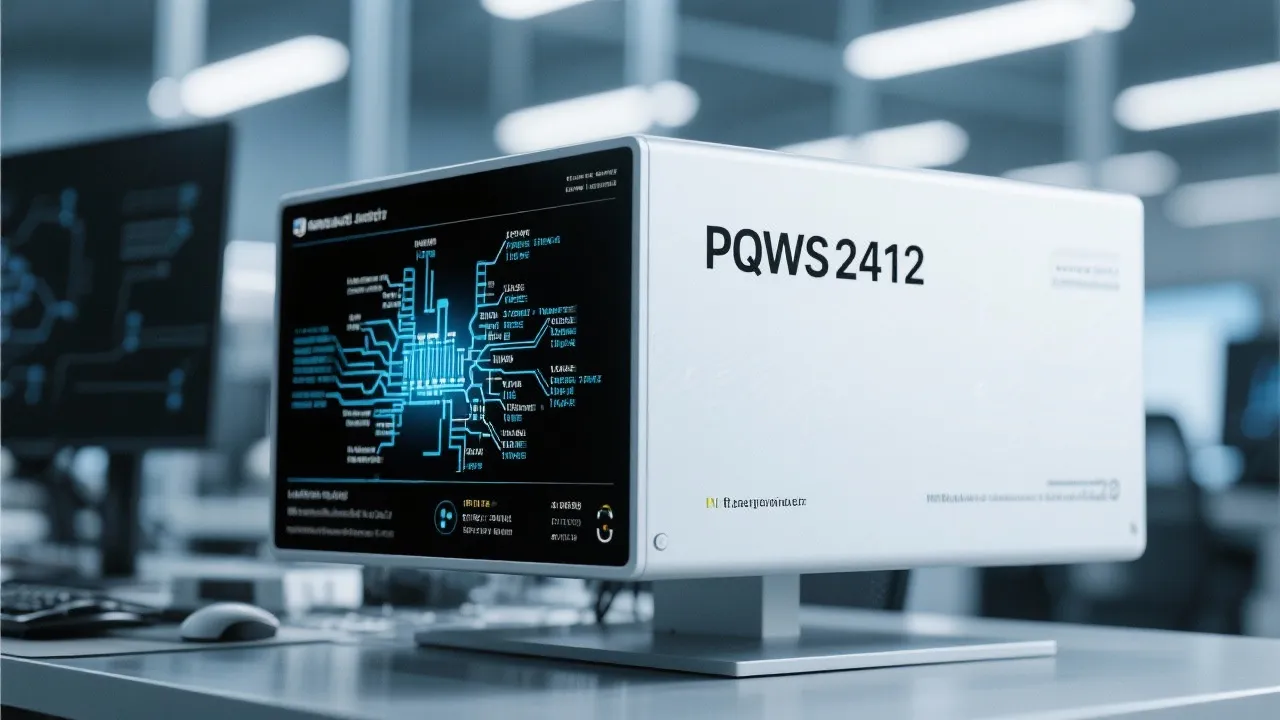
Unveiling the Intricacies of Pqws 2412
This comprehensive analysis of Pqws 2412 examines its pivotal role in modern technology. Pqws 2412, a term gaining traction among industry scholars, signifies advancing developments in specific tech sectors. Its relevance continues to expand as it integrates with evolving innovations, shaping future industry landscapes. The examination further explores Pqws 2412's impact, potential, and practical applications, offering insights from an expert's viewpoint.

Understanding Londonderry Towers: Location, Value, and Options
This guide explains what Londonderry Towers represents in the local property landscape and how to evaluate living there with a practical, expert lens. Objectively, it discusses how towers influence rental demand, day-to-day convenience, and resale considerations, while outlining the questions tenants and buyers should ask. It also includes conditions, a comparison table, and FAQs to support informed decisions.
