This guide explains how to interpret the product identifier “00.038 166 0009 54” and how it connects to sourcing decisions, documentation checks, and pricing discipline. Objectively, identifiers like this help standardize inventory, reduce labeling errors, and improve traceability across suppliers and warehouses. Background context also covers verification practices and procurement conditions.
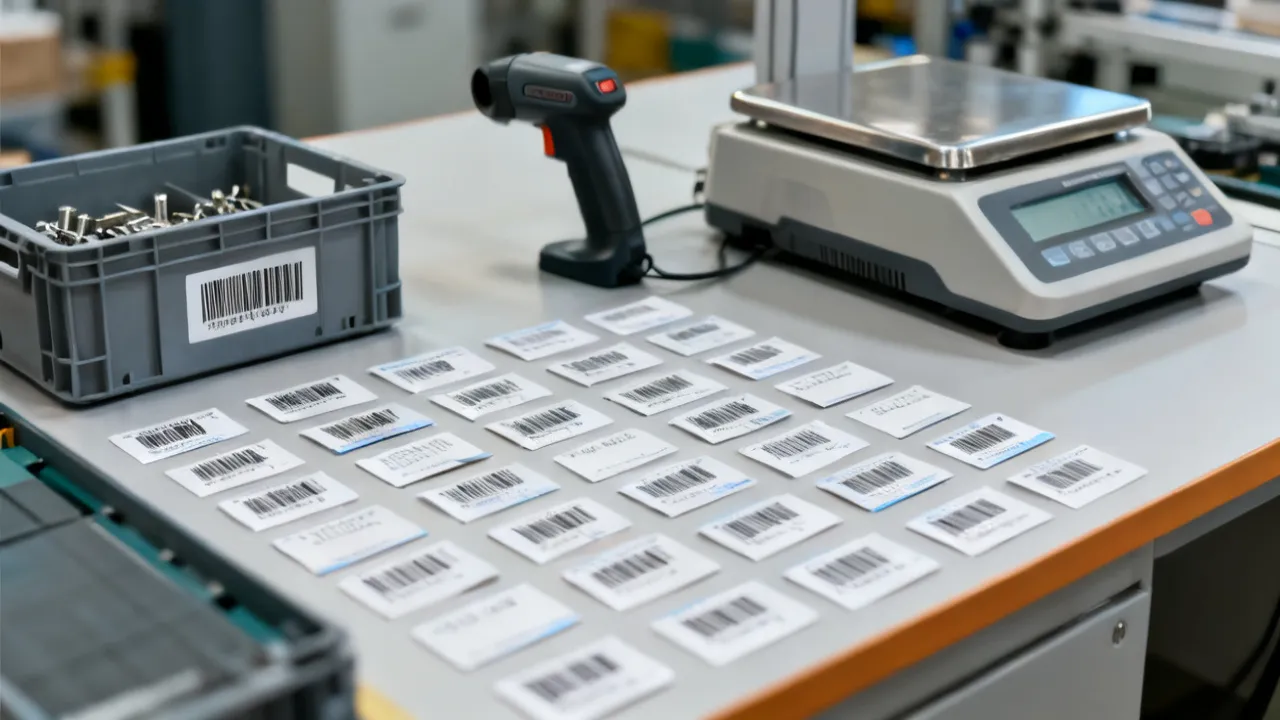
If you’re dealing with the product identifier 00.038 166 0009 54, treat it as a verification anchor rather than a decorative label. In procurement, logistics, and technical purchasing, a consistent code helps you confirm the exact item, align documentation, and avoid mismatches that can ripple through lead times, installation readiness, warranty claims, and inventory accounting.
Even when the price and supplier details are available, the safest workflow is to let the identifier drive confirmation steps: match it against the supplier’s datasheet, check packaging/label consistency, confirm the commercial description, and record the condition requirements before any payment milestone.
Product identifiers such as 00.038 166 0009 54 are commonly used to standardize item identity across multiple systems—procurement platforms, warehouse management, maintenance records, and quality documentation. For buyers and engineers, the value is practical: fewer “similar” items get substituted unintentionally, and teams can trace what was ordered versus what was delivered.
In many industries, the identifier works like a bridge between:
When identity is uncertain, teams often compensate through informal workarounds—accepting “close enough” descriptions, skipping label checks, or postponing verification until installation. Those shortcuts can create downstream friction: receiving teams may log the wrong item, technicians may discover a mismatch only when it’s time to mount or connect the part, and finance may process invoices that later fail to reconcile against what’s actually on site.
By contrast, treating 00.038 166 0009 54 as the anchor shifts the workflow from “interpretation” to “verification.” Instead of asking, “Does this look like what we want?” you ask, “Does this match the identifier exactly, in every required place?” That change sounds subtle, but it has a large impact on error rate—especially when there are multiple variants that share similar descriptions, appearance, or packaging styles.
From an operations and procurement lens, price discussions should never bypass identity verification. A quote that looks competitive may still conceal a risk if the shipped item does not correspond to 00.038 166 0009 54—especially when compatibility is strict or when downstream processes depend on precise specifications.
For top results, procurement teams typically establish a structured evaluation:
This method is consistent with widely adopted supply-chain quality approaches that emphasize traceability and documented verification. It also helps protect organizations against expensive rework when identity mismatches occur.
In practice, teams that rely on identity verification tend to negotiate from a stronger position. When the identifier is treated as non-negotiable, procurement can ask sharper questions such as: “Does your quotation map to this specific code and unit of measure?” “Will the packaging label include the identifier?” “Are there approved cross-references, and if so, are they documented and pre-authorized?” That clarity reduces back-and-forth and makes it easier to hold suppliers accountable if there is a deviation.
It’s also worth noting that identity verification is often where time is saved—not spent. Although confirming a code across documents and labels might feel like an extra step, it prevents rework that can consume days or weeks: partial returns, installation downtime, revised purchase orders, credit memos, and maintenance rescheduling. When operations are under pressure, that “hidden cost” becomes the real driver of procurement quality.
When working with a specific code like 00.038 166 0009 54, you usually want evidence that the supplier is referring to the same item across every stage. Look for alignment between:
Even without knowing the exact supplier name or price figure in advance, you can still enforce a strong control: require the identifier to appear consistently in all relevant documents and labels.
To make this operationally workable, consider defining “evidence requirements” in your internal process. For example:
These evidence requirements reduce the risk that the identifier was correct at the quotation stage but became inaccurate later due to internal supplier substitutions, warehouse re-packaging, or mixed inventory. Such substitutions can happen even with good suppliers; the point of a robust control is to detect it before it becomes your operational problem.
Also pay attention to common failure modes:
Because the identifier can be tied to specific manufacturing runs, specifications, or inspection regimes, the buyer should clarify any constraints early. The top practice is to capture these items in writing. Common examples include:
These controls reduce ambiguity and prevent disputes that often arise when the “spirit” of a quote is misunderstood.
To strengthen procurement discipline further, consider extending condition requirements into operational realities. For instance, if 00.038 166 0009 54 is used in an installation or integration context, ask whether the part must arrive:
Even if the identifier is correct, failure to meet these operational requirements can still cause costly downtime. In other words, the identifier confirms what you have; the condition requirements confirm whether it will function reliably in your environment.
Additionally, procurement teams often overlook the “paper acceptance” problem. A supplier might deliver the correct physical item but provide documentation that is missing, incomplete, or inconsistent (e.g., certificates not referencing the identifier or lacking batch numbers). That creates audit risk and delays payment verification. Therefore, align the identifier verification with documentation verification—not only one without the other.
| Step/Condition | Recommended Requirement | Why It Matters for 00.038 166 0009 54 | If Skipped (Typical Risk) |
|---|---|---|---|
| Code match across documents | Identifier appears on PO line, packing slip, and invoice | Confirms identity continuity | Mis-picks, incorrect receiving, delayed acceptance |
| Label/package consistency | Identifier on external packaging and item label | Reduces substitution risk | Inventory errors and compatibility problems |
| Specification alignment | Supplier-provided spec sheet matches description | Ensures technical fit | Rework, downtime, or installation failures |
| Inspection window | Define when and how acceptance testing occurs | Prevents “late” disagreements | Complex claims and delayed corrective actions |
| Return and escalation terms | Written procedure for mismatches | Improves resolution speed | Higher costs and operational disruption |
One reason this table is effective is that it ties each verification step to a specific risk outcome. When organizations treat identity checks as optional “best effort,” they unintentionally increase the likelihood of the exact failure modes the table describes. Conversely, when they treat those steps as mandatory controls, the system becomes predictable and repeatable.
If you’re building a local process, you can convert each row into a checklist item in your receiving workflow. For example:
Identifiers and traceability practices are widely discussed in supply-chain and quality management literature. For objective context on traceability, recordkeeping, and quality management systems, readers can consult standards and guidance from recognized bodies such as:
These sources support the general principle that consistent identifiers and documented verification reduce errors and improve traceability. Always interpret guidance within your specific industry and regulatory environment.
Even though the examples above reference broad standards, the operational takeaway is consistent across industries: traceability depends on the linkage between “what was ordered,” “what was delivered,” and “what was accepted.” The identifier 00.038 166 0009 54 plays a central role in that linkage, because it gives you a stable key to connect events across time and across departments.
To make this real for teams, many organizations formalize traceability with a “single source of truth” concept. In practice, that might mean one system (ERP, CMMS, or inventory platform) is treated as the authoritative record. The identifier is the key used to move information into that system, preventing divergence between spreadsheets, emails, and receiving logs.
Below is a practical step-by-step workflow you can adapt. It is written to remain useful even when price and exact supplier identity are not fully specified up front.
Record 00.038 166 0009 54 character-for-character. Avoid manual transcription errors by using OCR or scanning where available.
In addition to exact capture, you should decide how your team will treat spacing and punctuation. For instance:
A minor mismatch in formatting can become a major operational issue when someone tries to reconcile inventory records or locate the correct certificate. Therefore, define normalization rules (if any) and document them.
Require the supplier to reference the same identifier in:
To strengthen this stage, ask for explicit mapping between the identifier and the commercial description. For example, if the supplier quote says “Item A” and separately lists “00.038 166 0009 54,” confirm that “Item A” and the code refer to the same underlying part number and variant.
Some suppliers use catalog identifiers differently across regions or distribution channels. That’s not necessarily wrong, but it’s risky when your internal ordering requires one stable key. Require clarity so your organization doesn’t end up with the right appearance but an untraceable identifier.
An identifier can refer to an item, but commercial terms can still differ (e.g., per piece vs. per pack). Confirm the unit and pack quantity in writing to prevent pricing misunderstandings.
Also confirm packaging format details that can affect handling and installation. For example, you may need to know whether the supplier ships:
When the packaging format differs, your internal receiving procedure may fail. The item might still be correct, but the process for counting, storing, or issuing it might be wrong, producing inventory discrepancies.
Before shipping, confirm what “acceptable” means. If inspection is required, specify which checks are mandatory and the timeframe in which they must be performed after delivery.
Make acceptance criteria actionable. Instead of a vague “must be new,” specify conditions such as:
Timeframes matter too. If your acceptance window is short, receiving teams may feel pressured to accept items without proper verification. Define a realistic inspection window and ensure internal stakeholders understand that identity mismatches are valid rejection reasons.
At receiving, confirm:
Receiving checks should include not only presence but also consistency. For example, confirm that:
If you have barcodes, scan them and retain the scan evidence in your system (screenshots, scan logs, or attachments). This provides audit-ready proof that the identifier verification happened at the right point in the workflow.
Record whether the delivered item matches 00.038 166 0009 54, which documents were received, and any deviations. This supports audit readiness and improves future purchasing.
Documentation is not only about recording a pass/fail. It should also capture:
When these details are recorded, your organization can analyze patterns over time. For example, if mismatches frequently occur for a specific supplier or warehouse workflow, you can adjust procurement terms, strengthen pre-shipment evidence requirements, or redesign receiving controls.
Adopt the verification approach above when any of the following apply:
In addition to those conditions, consider making the workflow mandatory whenever identity ambiguity can create safety risk, regulatory noncompliance, or mission downtime. Even if a mismatch seems minor, the cost of verification errors can escalate quickly in high-stakes environments.
It can also be mandatory when you rely on the part for troubleshooting or diagnostics. For example, if technicians replace a component with the intention to isolate a fault, using the wrong variant can cause diagnostic misdirection. The identifier verification becomes a tool for both procurement control and technical accuracy.
When suppliers are located “nearby,” practical considerations often shift—such as faster delivery cycles and reduced inbound logistics complexity. In such cases, buyers in many regions typically benefit from:
Still, “nearby” does not eliminate the need to verify 00.038 166 0009 54. Faster logistics can improve speed, but identity mistakes can still cause operational downtime and administrative overhead.
In some locations, nearby sourcing can even increase substitution risk if suppliers move inventory rapidly between channels. That can happen when distribution warehouses consolidate stock and re-label items. Therefore, the faster the logistics, the more important it may become to formalize receiving verification so that speed doesn’t override control.
On the positive side, nearby sourcing can make escalation faster. If you discover a mismatch, you may be able to coordinate same-day returns or immediate correction shipments. However, even then, you must document the mismatch properly and prevent “informal acceptance.” Informal acceptance can lead to untraceable inventory and delayed audit resolution later.
So the correct posture is: use nearby sourcing to improve responsiveness, not to relax verification.
It is top treated as a product identifier or item code used to specify an exact product line and/or variant. In procurement practice, you confirm its meaning by matching it to supplier documentation and labeling.
In many cases, you should not rely on description alone. Descriptions can be shortened or edited, while the identifier (like 00.038 166 0009 54) provides a more precise anchor—especially when variants exist.
Even when descriptions are accurate, they can be ambiguous across suppliers or over time. Suppliers sometimes update marketing descriptions while leaving the technical identity unchanged, or they might reuse a generic description for a set of closely related variants. The identifier is the stable element that reduces that ambiguity.
Typically in the supplier quote line item, packing slip, and invoice. For additional certainty, it should also appear on the packaging label and/or item label received on site.
If the code is not visible on packaging, your receiving team may need to rely on label verification via internal scanning systems, supplier documentation cross-check, or re-labeling protocols (if your organization is allowed to re-label). Best practice is to have supplier labeling match your ordering identifier at the source.
Document the discrepancy immediately: take photos, record document numbers, and compare the received label to 00.038 166 0009 54. Then follow your agreed escalation and return procedure.
Also ensure that the item is quarantined if your process requires it. Quarantine prevents accidental installation or use, which can complicate returns and create traceability gaps. If the item must be tested for a short time due to operational needs, clarify how the item will be tracked and how you’ll maintain identity evidence.
No. “Nearby” can reduce logistics delays, but it does not change the core requirement: identity verification still matters to avoid compatibility issues and inventory errors.
What changes is mostly the speed of correction once verification is performed. Your verification steps should remain consistent so the process quality does not depend on geography.
Commonly, you should expect at least standard commercial paperwork (packing slip and invoice). Depending on your industry, you may also require conformance certificates, inspection reports, or batch/lot information tied to the item.
If the identifier 00.038 166 0009 54 is linked to a specific manufacturing run, then batch/lot documentation may be essential for compliance or quality assurance. Confirm this during procurement so the documentation arrives with the shipment rather than being requested later, which can delay acceptance and payment.
Evaluate price only after ensuring the item identity is confirmed. Ask the supplier to specify the exact code mapping and unit of measure. Then compare total landed considerations: lead time, acceptance criteria, and return terms—because the lowest unit price can become expensive if rework is required.
A useful mindset is to treat identity verification as part of the cost structure. When verification is rigorous, you reduce the probability of expensive failures. When verification is relaxed, you may end up paying more through replacement, downtime, expedite shipping, and administrative rework—even if the original unit price looked favorable.
When you encounter 00.038 166 0009 54, the very reliable approach is to treat it as your primary verification anchor. Pair it with consistent supplier documentation, clear conditions/requirements, and a documented acceptance process. Whether a supplier is “nearby” or farther away, disciplined identity checks protect operational continuity and improve procurement quality.
If you’d like, share the industry context (e.g., electronics components, industrial hardware, maintenance parts, or another category) and I can tailor the acceptance criteria and documentation checklist to match common practices in that sector—while still keeping the identifier verification at the center.
To fully realize the benefits of using 00.038 166 0009 54 as a verification anchor, you generally need more than a single receiving check. You need a repeatable workflow that covers the end-to-end path from ordering to storage to usage. While the earlier sections describe the core steps, this section provides additional implementation detail so teams can operationalize the concept in a way that reduces errors and supports audits.
Many organizations experience a “gap” between procurement planning and warehouse reality. Procurement specialists might verify identifiers against supplier documentation, but the receiving team might not have access to the same documentation or might rely on visual similarity. By designing the workflow so that the identifier is visible and verifiable at every handoff point, you eliminate those gaps.
A strong verification system typically uses two layers of control:
For 00.038 166 0009 54, the system record layer ensures that internal systems “know” the identity. The physical evidence layer ensures that reality matches what the system expects. If either layer is missing, mismatch risk rises. For example, if the system record is correct but physical evidence isn’t verified, an incorrect shipment can still be accepted into inventory—creating confusion later. If physical evidence is correct but the system record isn’t updated properly, traceability and reporting become unreliable.
To implement this, define who has responsibility for each layer:
Identifiers like 00.038 166 0009 54 can present in slightly different ways depending on labeling practices. Even when the underlying code is the same, differences in formatting can create confusion if your team treats the string too literally or too loosely. You want a balanced rule: strict enough to prevent mismatches, flexible enough to avoid false alarms.
Typical variations include:
Because 00.038 166 0009 54 is numeric with separators, the biggest risk is manual transcription and partial label capture. If you have barcode labels, prefer barcode scans tied to the full identifier rather than relying on typed strings. If you don’t have barcode support, use a standardized template for recording the code and require photo evidence at receiving for every exception.
Receiving checks are essential, but you can reduce surprises further by adding pre-shipment verification for sensitive items. This is especially valuable when replacement costs are high or when the shipment contains critical parts that must be installed immediately.
Pre-shipment verification could include:
When suppliers are “nearby,” scheduling pre-shipment confirmation can be easier, because turnaround time for communications and clarifications is shorter. However, even if pre-shipment checks are not feasible, you can still strengthen receiving by requiring the identifier on visible packaging and on the packing slip.
Acceptance criteria should be defined so that receiving staff and quality staff can objectively decide whether the item meets requirements. For items tied to 00.038 166 0009 54, define criteria across four dimensions:
If you implement acceptance criteria in a checklist format, it reduces subjectivity. It also helps train staff consistently. For example, instead of a vague “looks right,” the checklist might read: “Does the identifier on the outer label match 00.038 166 0009 54 exactly? If not, reject or quarantine pending investigation.”
Even with robust controls, mismatches can happen. The goal is not to prevent all mismatches, but to handle them in a way that minimizes operational disruption and maximizes traceability.
A good mismatch management path includes:
When mismatches are not controlled, they can lead to “silent acceptance,” where the wrong item is stored and later used because it was easier than resolving it immediately. Silent acceptance causes inventory drift and complicates warranty and compliance claims.
Many procurement and warehouse issues eventually appear as reconciliation failures: the system says you have item X, but the physical inventory contains item Y; or the system says the quantity is correct but the receiving record counted units differently than the packaging configuration. Using 00.038 166 0009 54 as an anchor helps prevent reconciliation errors, but only if you align how you count and store items.
To prevent inventory drift, ensure the following:
When these details are controlled, the identifier becomes not only a verification tool but a foundation for accurate inventory accounting. That accuracy supports forecasting, reorder planning, and audit readiness.
While identity verification is the primary purpose of using 00.038 166 0009 54 as an anchor, some items require technical fit confirmation because compatibility may depend on more than part number. Even when the identifier matches, you should still verify that the specification meets your installation environment.
Depending on the industry, technical fit checks might include:
When technical fit checks are required, the supplier datasheet becomes part of the verification evidence. The identifier should point you to the correct datasheet and the correct set of specifications. If the supplier datasheet does not align with the code, that’s a red flag—because it suggests the supplier’s documentation and physical item could be mismatched.
Identifier accuracy directly influences warranty management. If a part installed in the field is supposed to be 00.038 166 0009 54, then any warranty claim typically requires proof that the installed item matches the specified product identity. If you don’t confirm identity at receiving, warranty claims can become difficult or denied due to insufficient traceability.
To protect warranty outcomes, ensure the identifier is captured in the system records at receiving and, where relevant, linked to:
This linkage is the difference between a clean, evidence-supported claim and a dispute. The more robust your identifier verification, the easier it is to prove what was installed, when it was installed, and what documentation was received.
The presence of multiple similar items is one of the main reasons identity verification is necessary. Even when identifiers are close in appearance, they may represent different variants with different specifications. For procurement, the risk is that a supplier might ship the “nearest” item they have ready, especially if their warehouse has multiple bins and labeling conventions that are similar.
Using 00.038 166 0009 54 as a strict anchor helps prevent cross-substitution. But you also need process clarity on what constitutes “the same item.” Common rules include:
If your organization frequently deals with near-identical variants, consider creating an internal “approved substitution matrix.” In that matrix, you list which alternate identifiers are acceptable for which installations, and under what conditions. Even then, you treat 00.038 166 0009 54 as the primary anchor, not as something to replace casually.
In audits—internal or external—organizations are expected to demonstrate that they follow documented controls. Using 00.038 166 0009 54 as a verification anchor supports audit readiness because it provides a stable key for traceability.
To make your audit evidence stronger, ensure you can produce:
Auditors often look for the “story chain” across time. The identifier helps connect that story chain. Without it, you might rely on descriptions, dates, or supplier references that are harder to prove or may not match across documents.
Procurement teams frequently face a tension between speed and quality. Nearby suppliers can reduce lead times, and digital procurement systems can accelerate approvals. But speed without identity verification is risky. The good news is that identity verification can be efficient when designed well.
To make verification fast:
When identity verification is streamlined, it doesn’t slow down operations; it prevents rework. That rework prevention is often the biggest time saver of all.
To illustrate how these concepts can work in a practical scenario, consider a generic purchasing workflow where an organization orders a part referenced by 00.038 166 0009 54. This example is not tied to a specific industry and can be adapted.
1) Procurement creates a PO: The PO line item includes 00.038 166 0009 54 and defines the unit of measure (e.g., per piece or per pack). It also includes condition requirements (new/unused) and references acceptance criteria (label visible, no damage, required certificate included).
2) Supplier prepares shipment: The supplier ensures the code appears on the packing slip and outer packaging label. If your process requires it, they include a certificate referencing the code and any lot/batch information.
3) Receiving verifies: Receiving staff check that the identifier on the packing slip matches 00.038 166 0009 54. They also check the packaging label. If there’s a mismatch, they quarantine the shipment and escalate with photo evidence.
4) System record update: If the item passes verification, receiving posts the transaction in the inventory system, linking the identifier to the PO line. If the warehouse uses scanning, it uses the identifier associated with the label.
5) Technical/quality confirmation (if required): Engineering checks whether specification details align with installation requirements, and quality confirms documentation completeness. If acceptance testing is required, it is performed within the defined window.
6) Close-out: All evidence and results are recorded. If exceptions occur, deviation records are maintained for audit and warranty traceability.
Notice that the identifier is not only checked once—it’s used to link the entire chain of evidence from procurement to receiving to acceptance. That linkage is precisely what makes it an effective verification anchor.
If the underlying code is clearly the same but appears with formatting changes (e.g., spaces removed or punctuation replaced), follow your internal normalization rules. If your rules require exact formatting match, treat the difference as an exception and request confirmation. When in doubt, require the supplier to clarify and provide a consistent representation.
Quantity mismatch should be treated as a separate exception from identity mismatch. Still verify the identifier on the received packaging and packing slip, then document the quantity discrepancy. Resolve it through your agreed partial shipment or discrepancy process, and update inventory records accordingly.
That depends on your acceptance criteria. Many organizations accept the physical item but quarantine it from “release to use” until documentation is received, especially when conformance certificates or compliance records are required. For warranty and audit readiness, missing documentation often becomes a blocker later. Decide this in your acceptance plan.
Cross-reference tables help when suppliers provide alternates, but they shouldn’t replace physical verification. The risk is that the supplier’s alternate mapping might be wrong or might change between shipments. Packaging label verification is the most direct evidence of what arrived.
Store evidence alongside the PO and receiving transaction record. Use a consistent file naming convention or attachment approach that includes the identifier 00.038 166 0009 54, the PO number, and the receiving date. Ensure staff can retrieve it quickly when audit questions arise.
Across all steps—quotation, purchasing, receiving, inventory, and acceptance—the consistent theme is that 00.038 166 0009 54 should be the verification anchor. When teams use it consistently, they reduce substitution risk, prevent compatibility mistakes, improve traceability, and support warranty and compliance outcomes.
When suppliers are nearby, the process becomes faster, but the verification logic remains the same. Speed is an advantage only when it is built on accurate identity control, not when it bypasses it. The most resilient procurement operations treat identity verification as a core quality system function, not as an optional administrative step.
Whenever you handle 00.038 166 0009 54, keep your workflow anchored on three questions: (1) Is the identifier correct on the purchasing documents? (2) Is it correct on the physical packaging and received materials? (3) Do specifications, condition requirements, and acceptance criteria align with the identifier?
If you answer those questions reliably—consistently and with documented evidence—you’ll prevent many of the hidden problems that emerge after delivery: inventory drift, delayed acceptance, rework, installation failures, warranty disputes, and audit headaches.
Striking the Perfect Balance: Navigating Premiums and Out-of-Pocket Expenses in Senior Insurance Plans

Explore the Tranquil Bliss of Idyllic Rural Retreats

How to Make Lasting Memories at Disneyland Attractions

Affordable Phones and Plans for Seniors

Affordable Full Mouth Dental Implants Near You

Unlock the Top Kept Secrets to Finding Your Ideal Dentist for Flawless Dental Implant Results!

Discovering Springdale Estates

The Guide to Car Trading

Affordable Cell Phones Without Plans


Understanding Mckenna 1993: Context, Methods, and Use
This guide explains the academic and practical context behind “Mckenna 1993,” clarifying how the term is commonly referenced and what researchers typically look for when citing it. Objectively, “Mckenna 1993” is an identifier used in scholarly writing to point to a specific 1993 publication. Background notes cover why citation discipline, methodology clarity, and verification matter in research.

Understanding Peony Ants
Peony ants are a fascinating aspect of horticulture, often misunderstood in their role with peonies. Contrary to popular belief, these ants are not harmful to the flowers but are involved in a symbiotic relationship where each party benefits. This article explores this intriguing interaction, dispelling myths and providing insights into the biology and mutual dependence between peonies and ants.

Understanding N3 155shn in Technology
N3 155shn is a term increasingly prominent in the tech industry, representing a new wave of innovation that is influencing current trends. This article explores the significance, applications, and implications of N3 155shn, providing a thorough understanding for technology enthusiasts and industry professionals alike. By delving into its uses and potential impacts, readers will gain insights into how this technology is shaping the future landscape.

Exploring the Wonders of Cassia Carniel
This comprehensive guide explores Cassia Carniel, a plant recognized for its diverse applications and potential benefits. Originating from various regions, Cassia Carniel has become a subject of interest for botanists and nutritionists alike. Delve into the unique characteristics of this plant, its uses in different industries, and the latest research surrounding it.

Unveiling the Intricacies of Pqws 2412
This comprehensive analysis of Pqws 2412 examines its pivotal role in modern technology. Pqws 2412, a term gaining traction among industry scholars, signifies advancing developments in specific tech sectors. Its relevance continues to expand as it integrates with evolving innovations, shaping future industry landscapes. The examination further explores Pqws 2412's impact, potential, and practical applications, offering insights from an expert's viewpoint.

Understanding Londonderry Towers: Location, Value, and Options
This guide explains what Londonderry Towers represents in the local property landscape and how to evaluate living there with a practical, expert lens. Objectively, it discusses how towers influence rental demand, day-to-day convenience, and resale considerations, while outlining the questions tenants and buyers should ask. It also includes conditions, a comparison table, and FAQs to support informed decisions.
