This guide explains what Londonderry Towers represents in the local property landscape and how to evaluate living there with a practical, expert lens. Objectively, it discusses how towers influence rental demand, day-to-day convenience, and resale considerations, while outlining the questions tenants and buyers should ask. It also includes conditions, a comparison table, and FAQs to support informed decisions.
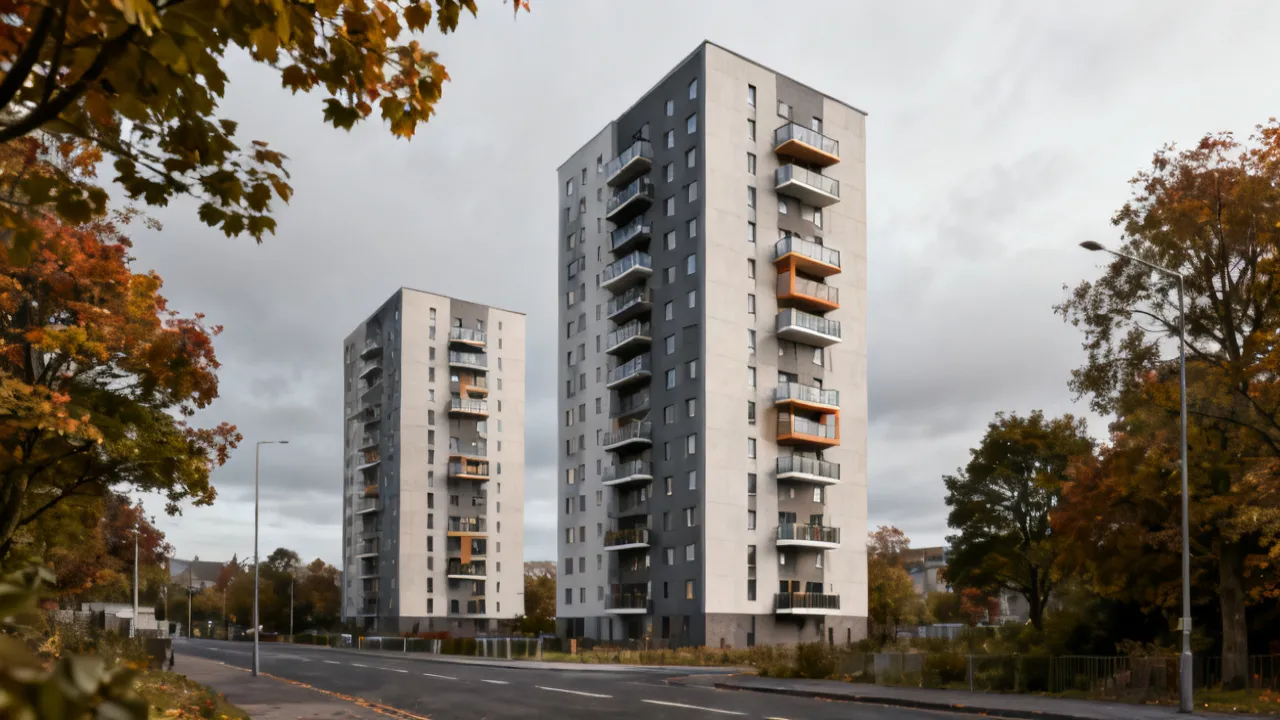
When you’re weighing Londonderry Towers as a place to live, the fastest path to clarity is to evaluate three factors first: (1) building performance and management, (2) day-to-day accessibility to nearby amenities, and (3) how the unit’s specifics affect good value and livability. From there, you can compare like-for-like options—because towers are not “one thing,” but a collection of individual layouts, service levels, and future obligations.
In practice, the “tower question” usually breaks into two smaller questions. The first is practical: Can you live well there on a normal Tuesday, not just on a viewing day? The second is financial and risk-based: Are the costs you’re signing up for predictable, and are the systems that protect you (fire safety, lifts, communal maintenance) properly managed? If you can answer those two questions with evidence—rather than marketing—you’re already making a more professional decision than most people.
Below, you’ll find a structured approach you can use whether you’re renting, buying, or considering a move after a temporary stay. The aim is not to tell you what to feel about the building, but to show you how to test the building’s reality. In tower living, that reality is often hidden in documents, maintenance logs, and the way management responds when something goes wrong.
Tower developments and high-rise blocks often become recognizable landmarks in a city’s residential pattern. Londonderry Towers fits into that broader category: a multi-unit building where residents share common systems such as lifts, entry access, fire safety infrastructure, and maintenance governance. Those shared elements usually create measurable differences in convenience, noise levels, energy efficiency, and overall resident experience—especially compared with lower-density housing.
At street level, a tower can look like a single address. Inside, it behaves more like a small ecosystem with its own rules. Your daily life will be influenced by systems you do not personally control: how quickly lift engineers respond, whether corridor lighting is maintained, how the building manages damp risk, and how communal waste and recycling is handled to avoid smells and clutter. Even if your unit is renovated beautifully, you still live within the building’s operational performance.
For a professional assessment, it’s important to focus less on the building’s reputation alone and more on the “operational truth”: how it’s managed, how quickly issues are handled, and what the building’s compliance record looks like over time. That is what turns a promising location into a sustainable home.
It also helps to understand that towers often concentrate costs and risks differently than houses. For example, major works—like façade repairs, lift replacement, or upgrades to fire alarm systems—can be expensive. The building’s reserve planning and management governance will determine whether those costs feel like an occasional adjustment or a recurring shock. Because those events can span years, the only reliable way to estimate them is through document-based due diligence and conversation with management (or the relevant property representative).
Finally, towers create a particular kind of “social environment.” Shared entry lobbies and communal corridors may bring more footfall and more daily noise than you expect. How these spaces are designed and maintained strongly influences whether residents feel comfortable, secure, and at ease.
In very tower living decisions, the word “nearby” isn’t vague—it reflects practical routines: commuting routes, access to grocery shopping, walking distance to services, and the reliability of public transport. For many residents, the value of a tower is not only the address, but also the predictability of their day—how long it takes to get essentials, how easy it is to reach healthcare, and whether everyday tasks are straightforward in typical local weather.
In and around Londonderry Towers, residents often think in terms of routine geography: routes to workplaces, schools, and leisure spots; the feel of surrounding streets; and how the neighborhood functions during peak hours. If you plan to commute by bus or train, you’ll want to confirm typical travel times at the hours you actually use. If you drive, consider parking availability and any restrictions that may change by day or season.
“Nearby” also includes experience-based factors that maps don’t show. For example:
Instead of treating “nearby amenities” as a checklist, use it as a routine simulation. Think about the last five errands you typically did in a week. Were they quick because distances were short, or because access was effortless (clear parking, reliable bus stops, safe sidewalks)? Tower living magnifies “effort differences” because you may depend heavily on elevators, entry security, and communal access—so small frictions can add up.
If you can, time a visit around your real routine: morning departure, lunchtime errand, evening return. Tower buildings can be quiet in the daytime during showings and surprisingly busy at night when residents arrive. The same is true for lifts—peak demand can change waiting times significantly.
A frequent mistake is to treat “tower living” as a single economic story. In reality, value depends on unit-level attributes and building-level risk. As an industry-informed way to think about it, consider:
Because property markets and management practices vary, the very objective approach is to evaluate documents, ask structured questions, and compare dwellings that are similar in size and specification.
To go beyond generalities, it helps to separate “headline price” from “total cost of living.” For renters, the rent is only the start: you might have additional charges, deposit considerations, or restrictions that affect long-term flexibility. For buyers, the mortgage is not the only monthly figure—service charges, ground rent (if applicable), and potential major works contributions can influence affordability as much as the purchase price.
Also, in tower buildings, affordability risk is often driven by what happens after you move in. A unit you view today is never the whole story; you must consider future obligations. Those obligations should be visible through:
Without this, you’re guessing. With this, you’re pricing risk. The difference between those two is often the difference between a good experience and an expensive surprise.
From a property-advisory perspective, due diligence should focus on the “systems that outlast your move-in date.” Residents experience those systems every day. If you’re considering Londonderry Towers, you’ll want answers that are specific—not marketing statements.
The best questions tend to be evidence-seeking and process-aware. Instead of asking “Are lifts maintained?”, ask “How often are lifts serviced, and what do the last inspection reports show?” Instead of asking “Is there fire safety?”, ask “When was the last fire risk assessment reviewed, and what actions were required?” This style of questioning prompts clarity and makes it harder for vague answers to slip through.
Ask about building management:
When you ask these questions, it’s also useful to check for consistency. A management team that runs a reliable system should be able to describe not only what they do, but also what happens when something is reported late or escalates. Ask for examples of how a common issue was handled—like recurring corridor lighting faults or repeated elevator stop failures—and whether they track trends rather than just respond to individual tickets.
Ask about good costs:
Be especially careful with “cover” language. Service charges often include a bundle of expenses; what matters is the breakdown. You want to understand whether cleaning, caretaking, landscaping, lift maintenance, and fire safety servicing are clearly identified and whether any costs are being transferred to residents in a way that feels disproportionate.
Also ask how often service charge rates change and whether there are management budgets. If management can show a budgeting cycle and a track record of controlling costs, that’s a strong signal. If they can’t explain why costs increased, that’s a risk signal.
Ask about your unit’s performance:
For performance, consider asking for evidence rather than impressions. For example: are there energy performance documents or statements about heating efficiency? Has the unit had upgrades to double glazing, insulation, or ventilation controls? Has there been a history of condensation or mould complaints? In a tower, those issues can reflect building-level ventilation or heating zoning, not just the apartment’s habits.
This type of questioning is consistent with widely used professional due diligence practices in the UK property sector, where buyers and tenants are encouraged to scrutinize management records and communal obligations. For broader context on leasehold and building safety considerations, consult established guidance from bodies such as the UK government and industry regulators. (Always use the very current guidance relevant to your jurisdiction.)
One practical tip: bring a written checklist to the viewing or call. In the stress of a property decision, people forget to ask follow-up questions. A checklist helps you verify not only that you asked once, but that you asked clearly enough to receive a meaningful answer.
Even when two units have similar floor area, lived experience can diverge dramatically in a tower. Residents often notice:
If your priority is calm mornings and restful nights, spend time thinking about where the unit sits relative to lifts, stairwells, and communal rooms. If your priority is convenience, look at how quickly you can reach daily essentials from the entrance.
To make this more actionable, consider a “felt experience checklist” that you can run during a visit:
Also, try to observe how people behave in shared spaces. If you notice repeated tailgating at the entry, a lack of staff presence, or consistently dirty communal areas, it can indicate deeper operational issues even if your specific unit looks fine.
Finally, tower blocks often have seasonal effects. In winter, heating performance and condensation risk become prominent. In summer, overheating and ventilation quality matter. If possible, check whether the unit has controllable heating and whether windows can be opened safely and effectively.
For high-rise and multi-unit accommodation, safety and compliance are not optional considerations. In many regions, building owners and managers are required to follow safety frameworks covering fire safety, compartmentation, emergency systems, and regular maintenance. While the specific regulatory regime depends on jurisdiction, the underlying principle remains consistent: a well-run building can demonstrate safe practice through documentation and routine inspection.
Before finalizing anything involving Londonderry Towers, request relevant records such as fire risk assessments, evidence of maintenance of fire doors and detection systems, lift maintenance schedules, and communal electrical inspections where applicable. If a vendor cannot provide clear documentation, consider that a decision signal rather than a minor inconvenience.
Documentation matters because it answers three questions at once:
It is also important to remember that paperwork quality matters. A folder of documents that is out of date—or documents that exist but are not backed by real maintenance actions—may not be enough. You’re looking for evidence that problems are identified and resolved rather than ignored.
If you’re buying, you may also want to understand how responsibilities are divided between the unit owner and the building management. Some items (like internal wiring) may be your responsibility, while communal fire safety systems may be managed at building level. Clear responsibilities prevent disputes later and help you understand where risk sits.
If you’re renting, you still deserve transparency. While you may not receive the full scope of building documentation, you can ask about safety checks and general maintenance arrangements. A responsible landlord or letting agent should be able to reassure you with verifiable information or explain how checks are completed and recorded.
You asked for price information, supplier details, and location-specific content. However, no verified numeric price figures or named suppliers were provided in your prompt. In the absence of confirmed data, the very responsible approach is to explain how to evaluate price and value properly rather than invent figures.
Here is an objective method you can use immediately:
For market benchmarking, rely on official statistics and reputable property research. In the UK, sources such as the Office for National Statistics (ONS) for housing trends and UK Finance or other recognized industry bodies can provide context on affordability and market conditions. Always interpret data carefully and ensure it aligns with the correct area and property type.
To make price evaluation more robust, you can also apply a “risk-adjusted comparison.” Two apartments may have the same asking price, but one may have:
When you adjust for these factors, your decision becomes evidence-based. You stop asking “Is this expensive?” and start asking “Is this expensive compared to its real cost and risk?” That shift often reveals whether a perceived bargain is actually hiding future bills.
If you’re dealing with a leasehold arrangement, also check what the lease means for cost increases. Some leases allow service charge adjustments that may rise quickly due to inflation and major works. A lease may look manageable now but become expensive if reserves are inadequate. That’s why reviewing past service charge statements matters as much as reading the current asking price.
| What to compare | What “good” looks like for Londonderry Towers | Requirements / conditions to confirm | Decision trigger (why it matters) |
|---|---|---|---|
| Building management | Clear maintenance routines, responsive issue handling, transparent policies | Request documented maintenance approach and complaint resolution history | Reduces good inconvenience and unmanaged defects |
| Safety documentation | Up-to-date records for fire and communal systems | Ask for fire risk assessment and evidence of servicing for relevant systems | Supports safe living and reduces risk exposure |
| Service charges / communal costs | Predictable costs with reasonable budgeting and clear coverage | Review latest service charge summaries and reserve/fund planning approach | Protects affordability and prevents surprise major works |
| Unit condition and upgrades | Modern, well-maintained fixtures; evidence of proper refurbishment | Check for dates of last upgrades and inspect for damp, drafts, or sound issues | Improves comfort and protects resale/rental appeal |
| Accessibility & daily convenience | Reliable access to “nearby” services and practical routes | Confirm commute times, entry security, and parking or transport arrangements | Determines whether routines feel effortless or stressful |
| Lease / tenure terms (if buying) | Reasonable remaining term and clear responsibilities | Review lease conditions, ground rent/service charge clauses, and any restrictions | Impacts financing, future saleability, and cost predictability |
To make your decision robust, follow a structured workflow. This is the approach you’d expect from a cautious industry advisor who prioritizes evidence over impression.
To further professionalize the process, add two optional steps that often prevent regret:
These steps convert a subjective viewing into a repeatable evaluation method. It helps you compare units using the same criteria and reveals which factors are truly driving difference in comfort and cost.
In many parts of Northern Ireland and the wider UK, tower living often appeals to residents who value convenience without sacrificing independence. Locally, “nearby” can mean quick access to shops, services, and social areas that keep weekday life smooth—even when the weather turns. Residents frequently also consider practical factors such as pedestrian safety, street lighting, and whether routes feel straightforward in the evening.
When evaluating Londonderry Towers, try to picture your normal week: when you’ll carry groceries, how you’ll manage deliveries, whether lift access aligns with your schedule, and how the area feels after work. Those observations are often more revealing than building brochures.
“Nearby” can also mean different things depending on lifestyle. For some residents, nearby means a commute route that is predictable even during delays. For others, it means quick access to family, school catchments, healthcare, and leisure. For many, it means a safe and comfortable walk to everyday errands—especially when returning with bags. Towers often attract people who value reduced friction; therefore, the small frictions matter.
If you’re moving with children or someone with mobility needs, consider additional details:
These questions may feel “extra” during a daytime viewing, but they often determine whether the building fits your real life.
You referenced “supplier details,” but no specific supplier names were provided. In property decisions, “supplier” typically translates into the building’s contractors and the service providers responsible for lifts, fire systems, cleaning, and maintenance. If the building uses named contractors, ask for service continuity and performance evidence.
For due diligence, request clarity on:
Even without a named supplier list, your goal is transparency: you want to know who operates the systems and how accountable they are when something goes wrong.
To assess contractor quality, ask for evidence that they are responsive and thorough. Examples of useful follow-up questions include:
Contractor quality often shows up indirectly: in how quickly issues are resolved, whether repeat faults occur, and whether residents trust management. A contractor might be technically competent but operationally slow; operational slowness can be felt daily in lifts, access, and corridor maintenance.
Also ask whether contracts are reviewed periodically. A building that periodically re-tenders or reviews contractor performance may be more likely to remain efficient and cost-controlled. A building that never reviews contracts may accept slow performance as “normal,” which can affect resident experience long-term.
Below are frequent issues that arise when people consider buildings like Londonderry Towers. The answers are written to be objective and decision-focused.
Start with building management and safety documentation, then review unit-specific details like layout, heating, and sound sensitivity. The “felt experience” and future cost predictability often come from how the building is run, not just the apartment’s appearance.
If you want a one-paragraph checklist for the first step: verify that safety documentation exists and is current, confirm how service charges are set and what they include, and assess the unit’s likely everyday experience (noise, ventilation, lift proximity). If those align, then you can confidently move to more detailed checks like internal condition and upgrade quality.
Communal service charges can vary, and planned major works may increase future expenses. To avoid surprises, request recent service charge accounts and any reserve/major works plan. Clarify what’s included versus what’s billed separately.
“Hidden costs” sometimes arise from ambiguity. For example, if maintenance is billed under a broad “management” line item without a breakdown, residents may later realize that certain items were never included or were included at a different ratio. A strong approach is to demand line-item clarity and ask how future budgets are built.
Use realistic routines: check travel times during your work hours, confirm access to everyday services, and consider walking conditions after dark. If possible, visit at different times to understand noise patterns and entry congestion.
For a more accurate evaluation, also consider your “worst day” scenario: when you’re tired, carrying shopping, and it’s raining. Convenience isn’t just distance; it’s also friction. Tower living can add friction if entry access is slow or if lifts are frequently delayed. That friction can make a location that seems close on a map feel far in real life.
Ask for evidence of fire safety risk assessment and proof of servicing for relevant systems. Also request maintenance records for lifts and communal infrastructure, along with any inspection summaries that show compliance over time.
When reviewing documents, focus on recency and completeness. Out-of-date safety assessments are a red flag. In addition, ask whether identified actions were completed, not just recommended. A risk assessment that repeatedly flags issues without closure may be less reassuring than one that has an action plan and evidence of follow-through.
Compare floor level, aspect, internal upgrades, and likely noise exposure. Include service charge impacts and consider whether there are structural or layout differences affecting day-to-day comfort.
To compare fairly, you can also estimate your “likely monthly spend” by modeling scenarios. For example, if heating costs differ due to orientation and glazing, that can change your affordability. If one unit is near lift shafts, noise and vibration may affect your quality of life. Fair comparison is not only about price; it’s about cost and comfort together.
There’s no universal answer. Renting may suit shorter time horizons, while buying may support stability if lease terms and service charges are manageable. Evaluate your timeframe, affordability, and risk tolerance, and confirm all financial obligations before deciding.
If you’re unsure, you can treat the decision like a two-option analysis: what’s the cost of renting versus the cost of owning over your expected stay, including service charges and potential major works contributions? If owning’s uncertainty is too high for your risk tolerance, renting may be more psychologically comfortable. If your finances are stable and lease terms are favorable, ownership may be viable.
That should be treated as a material issue. Clear records enable informed decisions. If documentation is missing or incomplete, ask why and whether access can be provided promptly. If not, consider it a sign to pause.
It can be tempting to dismiss missing documents as “a delay” but in tower living, missing documents often correlate with governance problems. A professional approach is to treat it as a negotiation and a risk assessment. If you cannot obtain evidence, you cannot confidently price risk.
Benchmark against reliable market information using comparable properties and confirmed transaction data where possible. For broader context, use official or reputable industry sources rather than anecdotal social claims.
Exaggerated claims often appear in two forms: high-level optimism about location and vague promises about maintenance. To avoid them, require specificity. Demand examples, document references, and comparisons to similar units. A claim that can’t be supported with details is not helpful for decision-making.
Londonderry Towers can be an appealing option for residents who want a structured, amenity-connected lifestyle with the convenience of living in a multi-unit building. The very reliable way to judge it is to ground your decision in building operations, verified documentation, and realistic daily routines “nearby.” If you combine that with a like-for-like comparison of unit condition and costs, you’ll move from impression to evidence—and that is where confident choices begin.
In tower living, clarity rarely comes from one conversation. It comes from a consistent pattern: management answers clearly, documents are current, costs make sense and are explained transparently, and the lived experience aligns with your routine. If you find those conditions, a tower can be a practical and comfortable home. If not, the risks you’re taking are harder to manage later.
Ultimately, the decision is yours. The goal of this guide is to make it easier to make that decision responsibly—so you can enjoy the convenience of a tower without inheriting unpriced operational stress.
This article does not include specific price figures or supplier names because none were provided in the prompt. If you share the exact unit type, tenure (rental or ownership), and any known price points or supplier/contractor details you want incorporated, I can revise the article to include them responsibly and consistently with SEO top practices.
Striking the Perfect Balance: Navigating Premiums and Out-of-Pocket Expenses in Senior Insurance Plans

Explore the Tranquil Bliss of Idyllic Rural Retreats

How to Make Lasting Memories at Disneyland Attractions

Affordable Phones and Plans for Seniors

Affordable Full Mouth Dental Implants Near You

Unlock the Top Kept Secrets to Finding Your Ideal Dentist for Flawless Dental Implant Results!

Discovering Springdale Estates

The Guide to Car Trading

Affordable Cell Phones Without Plans


Understanding Mckenna 1993: Context, Methods, and Use
This guide explains the academic and practical context behind “Mckenna 1993,” clarifying how the term is commonly referenced and what researchers typically look for when citing it. Objectively, “Mckenna 1993” is an identifier used in scholarly writing to point to a specific 1993 publication. Background notes cover why citation discipline, methodology clarity, and verification matter in research.

Understanding Peony Ants
Peony ants are a fascinating aspect of horticulture, often misunderstood in their role with peonies. Contrary to popular belief, these ants are not harmful to the flowers but are involved in a symbiotic relationship where each party benefits. This article explores this intriguing interaction, dispelling myths and providing insights into the biology and mutual dependence between peonies and ants.

Understanding N3 155shn in Technology
N3 155shn is a term increasingly prominent in the tech industry, representing a new wave of innovation that is influencing current trends. This article explores the significance, applications, and implications of N3 155shn, providing a thorough understanding for technology enthusiasts and industry professionals alike. By delving into its uses and potential impacts, readers will gain insights into how this technology is shaping the future landscape.

Exploring the Wonders of Cassia Carniel
This comprehensive guide explores Cassia Carniel, a plant recognized for its diverse applications and potential benefits. Originating from various regions, Cassia Carniel has become a subject of interest for botanists and nutritionists alike. Delve into the unique characteristics of this plant, its uses in different industries, and the latest research surrounding it.

Unveiling the Intricacies of Pqws 2412
This comprehensive analysis of Pqws 2412 examines its pivotal role in modern technology. Pqws 2412, a term gaining traction among industry scholars, signifies advancing developments in specific tech sectors. Its relevance continues to expand as it integrates with evolving innovations, shaping future industry landscapes. The examination further explores Pqws 2412's impact, potential, and practical applications, offering insights from an expert's viewpoint.
Understanding Londonderry Towers: Location, Value, and Options
This guide explains what Londonderry Towers represents in the local property landscape and how to evaluate living there with a practical, expert lens. Objectively, it discusses how towers influence rental demand, day-to-day convenience, and resale considerations, while outlining the questions tenants and buyers should ask. It also includes conditions, a comparison table, and FAQs to support informed decisions.
